
How to Customize Hotel Linen With a Logo
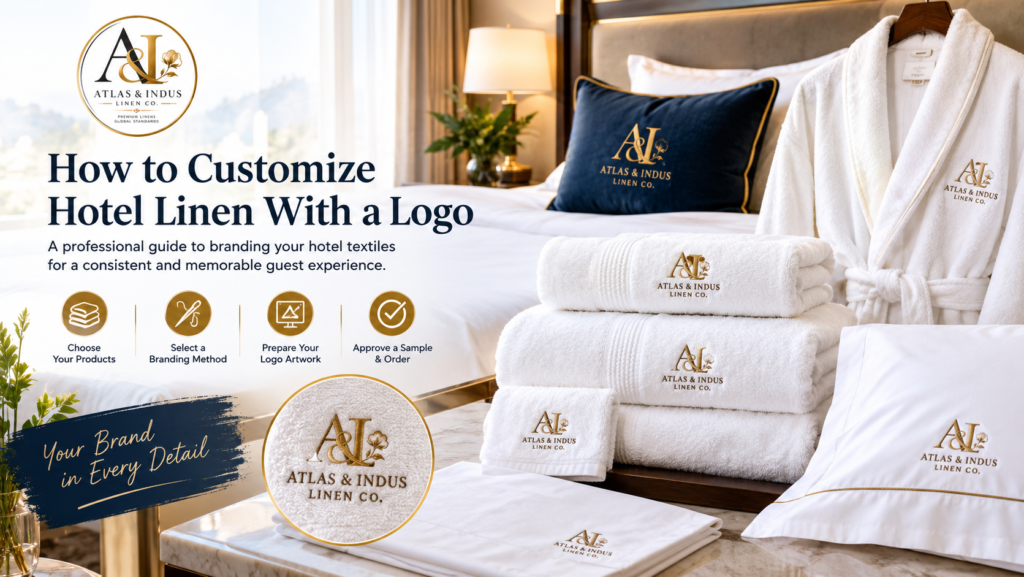
To customize hotel linen with a logo, first choose the textiles you want to brand, such as towels, bathrobes, pillowcases, or other hotel linen. Then select a suitable method, such as embroidery, a woven design, a label, or fabric printing. Prepare your logo artwork, agree on its size and placement, and approve a sample before placing a bulk order. This process helps hotels, resorts, and riads create a consistent brand image while making sure their textiles remain suitable for guest use and regular laundry.
Branded hotel linen can add a personal touch to guest rooms, bathrooms, spas, and other hospitality spaces. However, a good result depends on more than adding a logo. You also need to consider fabric type, comfort, appearance, washing requirements, order quantity, and cost.
What Is Custom Hotel Linen?
Custom hotel linen is made or finished to meet a property’s specific requirements. These requirements may include fabric, dimensions, colour, finish, packaging, and branding.
Adding a logo is one way to customise hospitality textiles. Depending on the product and supplier, a hotel may choose embroidered initials, a full logo, a woven design, or a branded label.
Hotels use branded textiles to create a consistent appearance across guest rooms and shared spaces. For example, a boutique hotel may add a small logo to its towels and bathrobes, while a resort may prefer subtle branding that matches its overall design.
The aim is to make the textiles feel like part of the property rather than ordinary products with a large promotional mark.
Which Hotel Linen Products Can Have a Logo?
Start by deciding where branding would be useful. Not every textile needs a visible logo, and some products may be better suited to discreet branding.
| Hotel textile | Possible logo placement | What to consider |
|---|---|---|
| Bath towels | Lower border or corner | Keep the logo clear and comfortable against the skin |
| Hand towels | Lower hem or corner | Use a size that suits the smaller fabric area |
| Bathrobes | Chest area or another agreed position | Check comfort, appearance, and placement when worn |
| Pillowcases | Edge or hem | Avoid a position that could affect sleeping comfort |
| Bed sheets | Hem or discreet edge | Consider how the logo appears when the bed is made |
| Duvet covers | Lower edge or another agreed position | Check visibility, washing, and finishing |
| Table linen | Corner or border | Match the logo position to the table setting |
These are possible placements, not fixed industry rules. The best location depends on the product, design, construction, and intended use.
Before ordering, ask the supplier which branding methods are suitable for each item. A method that works well on a bathrobe may not produce the same result on a textured towel or lightweight bedsheet.
What Are the Best Ways to Add a Logo to Hotel Linen?
There are several ways to brand hospitality textiles. Each method has different costs, visual effects, and production requirements.
1. Logo Embroidery
Embroidery adds a logo or design to fabric with stitches. It is a popular option for towels, bathrobes, pillowcases, and selected other textiles.
Hotels may choose embroidery for initials, simple symbols, crests, or logos that suit the available stitching area.
Advantages:
- Creates a textured, premium-looking finish.
- Can work well for simple logos and monograms.
- Allows different thread colours, depending on the design and supplier.
- Can suit smaller custom orders, depending on the supplier’s requirements.
Things to check:
- Very small text and fine details may not reproduce clearly.
- Dense stitching can affect the feel of the fabric.
- The design needs to suit the selected material.
- The supplier should confirm how the embroidery will handle the property’s laundry process.
Ask for a sample on the actual fabric before approving the design.
2. Woven Logos
A woven logo becomes part of the fabric design during weaving. Depending on the product and production method, the logo may be woven into a border or another section of the textile.
This option may suit hotels that want a coordinated design across selected products.
Woven branding often requires specific production preparation. Minimum quantities and setup costs may also apply, so it is worth discussing this option early in the ordering process.
Ask the supplier whether the design can be woven into the selected product and what order quantity is required.
3. Branded Labels
A woven or printed label can display a hotel name or brand mark. Labels may work well for discreet branding or for identifying products.
However, labels can differ in their position, feel, and construction. A label placed where it rubs against the guest’s skin may reduce comfort.
Ask about label material, edge finishing, attachment, and resistance to repeated washing. Choose a location that does not interfere with the product’s intended use.
4. Fabric Printing
Some suppliers offer printing for selected textile products. The appearance and durability depend on the printing method, fabric, ink or other materials used, and care process.
Printing may suit designs with colour or detail that would be difficult to achieve through other methods. However, do not assume it will perform equally well on every towel, robe, or bedsheet.
Ask the supplier to confirm whether printing is suitable for the exact textile and whether it can withstand the hotel’s regular washing routine.
Which Method Should You Choose?
Use this simple comparison as a starting point.
| Method | May suit | Main consideration |
|---|---|---|
| Embroidery | Towels, robes, and selected bedding | Stitch detail, fabric feel, and laundry performance |
| Woven design | Products designed with a woven logo or border | Production setup and minimum quantity |
| Label | Discreet branding and product identification | Comfort, placement, and attachment |
| Printing | Suitable textiles requiring a printed design | Method-specific wash performance and fabric compatibility |
No method is best for every hotel. Compare the visual result, product suitability, cost, and expected use before choosing.
How Do You Prepare Your Hotel Logo for Custom Linen?
A clear logo file helps the supplier assess whether the design can be reproduced accurately.
Provide a High-Quality Logo File
Ask your designer for a vector version of the logo if one is available. Vector artwork can be resized without the same loss of sharpness that often occurs when a small pixel-based image is enlarged. Common vector formats include AI, SVG, EPS, and vector PDF, but you should confirm which formats your supplier accepts.
Adobe explains the difference in its guide to vector and raster image files.
If you only have a low-resolution image, send it to the supplier for review. They may need a cleaner file or artwork adjustments before production.
Keep the Design Clear
A complicated logo can lose detail when reproduced on a small area of fabric.
Before approving the artwork, check:
- Whether the lettering remains readable.
- Whether small symbols can be reproduced.
- Whether the logo works at the intended size.
- Whether the colours can be matched closely enough for your needs.
- Whether the design looks balanced on the selected textile.
A simplified version may work better for small items. Keep the main brand identity recognisable, and ask the supplier to show how the logo will look at its finished size.
Confirm the Colours
Send the exact brand colours or colour references where available. Ask the supplier to explain how closely the chosen thread, label, or printing colours can match your reference.
The final appearance may vary with the material and production method. Approve the result on a sample rather than relying only on a screen preview.
How Large Should a Hotel Linen Logo Be?
There is no single logo size that suits every hotel textile. A logo for a bath towel may need different dimensions from a logo for a bathrobe or pillowcase.
Consider three things:
Product size: A small hand towel has less space for branding than a large bath towel.
Logo design: A wide logo, a circular emblem, and a wordmark each need different proportions.
Brand style: A discreet logo may suit a luxury property, while a larger mark may fit a particular resort or spa design.
The logo should be easy to recognise without dominating the textile. Ask the supplier to recommend a finished width and height based on the product, then approve those measurements in writing.
For repeat orders, keep a record of the approved logo dimensions. This helps maintain consistency across different batches.
Where Should You Place a Logo on Hotel Towels, Robes, and Bedding?
Logo placement affects how the textile looks when guests use it and when housekeeping folds or arranges it.
Towels
A lower border or corner may keep branding visible without covering too much of the towel. Confirm how the towel will look when folded on a rack or placed in a bathroom.
Bathrobes
A chest position may make a logo easy to see when the robe is worn. Make sure the chosen placement does not feel rough or uncomfortable.
Pillowcases and Bedsheets
A discreet hem or edge may work better than a prominent central logo. Guests should be able to sleep comfortably without a logo, seam, or thick stitching becoming a distraction.
Table Linen
A logo near a corner or border may suit the table setting. Check how the mark will appear when the cloth is placed on the table and when napkins are folded.
Practical tip: Request a placement diagram or marked sample. Do not rely on a verbal description such as “near the bottom” when ordering hundreds of items.
How Can You Make Sure Branded Hotel Linen Lasts?
A logo should still look acceptable after repeated use and washing. However, durability depends on the fabric, decoration method, quality of production, and care process.
Before approving an order, ask your supplier:
- Is the decoration method suitable for the chosen textile?
- What washing and drying instructions should housekeeping follow?
- Could the logo affect the fabric’s feel or flexibility?
- Has the finished sample been checked after suitable washing?
- What quality checks will be used during production?
If the hotel uses a commercial laundry service, share the planned care process with the supplier. Confirm that the recommended cleaning method is compatible with the decorated product.
Do not assume that all embroidered, printed, or woven logos have the same service life. Ask for product-specific information and test the sample under conditions that reflect real use.
What Should Hotels Confirm Before Placing a Custom Linen Order?
Branded linen orders involve more than choosing a logo and colour. A written specification helps prevent misunderstandings between the hotel and the supplier.
Use this checklist before approving production.
Product Specifications
- Type of textile and intended use.
- Fabric composition and construction.
- Dimensions, colour, and finish.
- Quantity required for each product and size.
Branding Specifications
- Approved logo artwork.
- Branding method.
- Finished logo width and height.
- Exact placement on each product.
- Thread, print, or label colours.
- Any special requirements for lettering or small details.
Sampling and Quality
- Sample availability and cost.
- Approval of the logo’s appearance on the actual fabric.
- Care instructions and washing suitability.
- Quality standards for repeat orders.
- How the supplier will handle any approved changes.
Commercial Details
- Minimum order quantity, if applicable.
- Setup or artwork charges.
- Price per item.
- Production and delivery schedule.
- Packaging requirements.
- Process for repeat orders and replacement items.
Confirm these details in writing before production begins. Keep the approved sample or clear reference photographs with the final specification.
How to Order Custom Hotel Linen With a Logo From a Supplier
A clear enquiry helps the supplier understand what you need and prepare a more accurate quotation.
Follow these steps:
Step 1: List the products. Decide whether you need branded towels, robes, bedding, or several textile types.
Step 2: State the quantities. Provide the estimated number of items by product, size, and colour.
Step 3: Share the logo. Send your available artwork and brand colour references.
Step 4: Explain your design preferences. Describe the preferred logo size, placement, and branding method if you already have one in mind.
Step 5: Request a sample. Ask to review the logo on the selected fabric before approving the full order.
Step 6: Confirm specifications. Record the product details, branding, care requirements, quantity, price, and delivery schedule.
For hospitality buyers exploring made-to-order options, the Atlas & Indus Linen Bespoke Linen Solutions page is a relevant starting point for discussing project requirements. Confirm the available branding methods, product options, minimum quantities, and lead times for your specific order.
A Simple Enquiry Template for Branded Hotel Linen
You can use this template when contacting a textile supplier.
Subject: Custom Hotel Linen With Logo — Request for Quotation
Hello,
We are looking for custom hotel linen for our property and would like to discuss adding our logo to selected products.
Our initial requirements are:
- Products: [Towels, bathrobes, pillowcases, bedsheets, or other items]
- Estimated quantity: [Quantity per product]
- Fabric and specifications: [If known]
- Preferred branding method: [Embroidery, woven design, label, printing, or advice requested]
- Logo file: [Available format]
- Preferred logo placement: [Location on each product]
- Delivery destination: [Country or city]
- Required delivery date: [Date]
Please confirm the available options, minimum order quantities, sample process, pricing, care requirements, and estimated production and delivery times.
Please also advise if you need any additional details before preparing a quotation.
Thank you.
Frequently Asked Questions
Can I put my hotel logo on towels and bathrobes?
Logo branding may be available for towels and bathrobes, depending on the product and supplier. Ask which methods are suitable and review a sample before placing a bulk order.
Is embroidery or printing better for hotel linen?
Neither method is always better. Embroidery creates a stitched design, while printing applies a design to the fabric using a suitable printing method. Compare appearance, feel, product compatibility, washing needs, and cost.
What file format should I send for a hotel logo?
A vector file is often useful because it can be resized without the same loss of sharpness as a low-resolution image. AI, SVG, EPS, and vector PDF are common options, but the supplier should confirm its accepted formats.
Can every hotel linen product have the same logo size?
Not always. The logo may need different dimensions to suit towels, robes, pillowcases, and other products. Keep the design consistent while adjusting its size to fit each item.
Will an embroidered hotel logo affect comfort?
It can, depending on the stitch density, backing, location, and fabric. Ask for a sample and check both sides of the textile before approving the design, especially for items that touch the guest’s skin.
What should I check before ordering branded linen in bulk?
Confirm the textile specifications, decoration method, logo size and placement, sample approval, care requirements, quantity, costs, and delivery schedule. Record the final agreement in writing.
Can a hotel use any logo it finds online?
No. A hotel should have permission or another valid legal basis to use the logo or artwork it submits for production. Use authorised brand files and confirm usage rights where a third party owns the design.
Final Thoughts
Custom hotel linen with a logo can help hotels, resorts, and riads create a consistent identity across guest rooms and shared spaces. The best results come from choosing suitable products, preparing clear artwork, selecting an appropriate branding method, and testing the design before ordering in bulk.
Keep the logo easy to recognise, place it where it will not reduce guest comfort, and confirm that the finished textile suits your laundry routine. Most importantly, record the approved specifications so future orders can maintain the same appearance and quality.