
Hotel Bedding Selection Guide: How to Choose the Right Linen
Table of Contents
Choosing hotel bedding is about more than finding sheets that look good. Hospitality bedding needs to provide a comfortable guest experience while also meeting the practical demands of regular use, laundering, storage, and room preparation.
From fitted sheets and duvet covers to pillowcases and other bedroom textiles, every part of a hotel bedding setup has a role to play.
If you’re comparing options for a hotel, resort, guest accommodation, or other hospitality property, this hotel bedding selection guide can help you understand the key factors to consider before purchasing.
What Does Hotel Bedding Include?
Hotel bedding can include several different textile products, depending on the property’s room configuration and operating requirements.
Common products include:
- Fitted sheets
- Flat sheets
- Duvet covers or enclosures
- Pillowcases
- Mattress protectors
- Other functional or decorative bedding products
The exact combination depends on the hotel’s bed sizes, room standards, housekeeping procedures, and preferred bedding system.
Before purchasing, consider the complete bedding setup rather than evaluating each product separately.
Start With the Intended Use
The first question to ask is simple: Where and how will the bedding be used?
A luxury hotel, resort, guest house, healthcare facility, and residential bedroom can all have different requirements.
Hospitality bedding may experience frequent guest use, repeated laundering, handling, folding, storage, and room turnover. Therefore, buyers should consider more than appearance when comparing products.
Important considerations can include:
- Expected frequency of use
- Laundering requirements
- Storage conditions
- Occupancy patterns
- Housekeeping procedures
- Mattress and bed dimensions
- Desired guest experience
- Product replacement requirements
Understanding the operating environment makes it easier to choose bedding that fits the property’s actual needs.
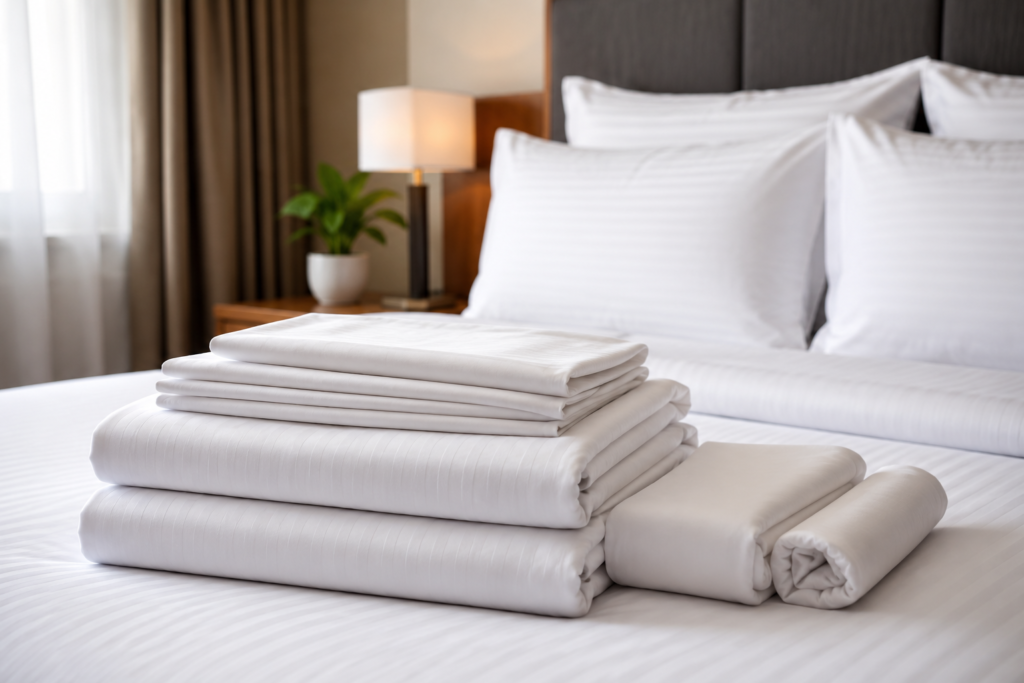
Consider the Fabric
Fabric is one of the most important factors when selecting hotel bedding.
Cotton is widely used for bedding because of its familiar feel and breathable characteristics. Other textile constructions may also be appropriate depending on the product and intended application.
Rather than choosing a material simply because it sounds premium, consider how the fabric is expected to perform within your hotel’s operation.
Important factors can include:
- Fabric composition
- Feel and comfort
- Breathability
- Construction
- Care requirements
- Expected frequency of use
- Compatibility with commercial laundering
Always review the manufacturer’s product specifications before purchasing.
Look at Thread Count in Context
Thread count is often discussed when comparing hotel sheets and premium bedding, but it should not be the only factor used to evaluate a product.
A higher thread count may contribute to a particular fabric feel, but overall bedding quality and suitability can also depend on factors such as the yarn, fabric construction, material, and finishing.
For hospitality buyers, a better question is:
Does the complete product meet the property’s comfort, performance, care, and operational requirements?
Looking at the complete product rather than one specification can support more informed purchasing decisions.
Choose Bedding for Guest Comfort
Guest comfort should remain central to any hotel bedding decision.
Sheets and duvet covers come into direct contact with guests, so their feel and presentation matter.
When evaluating products, consider:
- Texture
- Breathability
- Overall comfort
- Appearance
- Suitability for the property’s room standard
A comfortable bedding setup can complement the overall presentation of a guest room.
Because comfort is subjective, hotels may benefit from evaluating samples before committing to a larger purchase.
Consider Commercial Laundering
Hotel bedding can go through repeated laundry cycles, making care requirements an important part of product selection.
Before purchasing, review the manufacturer’s care instructions and consider whether the product is compatible with the property’s existing laundry process.
Hotels should also establish consistent procedures for handling bedding before and after commercial washing. Our guide to hotel linen care after commercial washing provides additional information on inspecting and managing linen following the laundry process.
Questions worth considering include:
- What care instructions does the manufacturer provide?
- Is the product suitable for the property’s laundering process?
- How will it be dried?
- How will it be stored?
- Does the expected care process fit the hotel’s workflow?
There is no universal washing or drying process that should automatically be applied to every textile. Product-specific instructions should guide care.
Choose the Right Fitted Sheet
Fitted sheets are designed to fit around the mattress and form an important part of many hotel bedding systems.
When selecting a fitted sheet, check the available dimensions and ensure that the product is compatible with the mattresses being used.
A good fit can make bed preparation easier and help create a neat appearance.
For hotels with multiple room categories, it is also important to keep track of the different mattress and bedding sizes required throughout the property.
Select Suitable Duvet Covers or Enclosures
The duvet cover or enclosure is another important part of the bedding setup.
Hotels should consider its:
- Size
- Construction
- Fabric
- Feel
- Care requirements
- Compatibility with the duvet being used
A well-coordinated duvet cover can contribute to both guest comfort and the visual presentation of the room.
Properties looking for a smooth and refined bedding feel may consider high-thread-count duvet enclosures, provided the product specifications meet their operational requirements.
Don’t Forget Pillowcases
Pillowcases are smaller than sheets and duvet covers, but they remain an important part of the guest bedding experience.
They should be compatible with the pillows being used and selected according to the property’s comfort, appearance, care, and operational requirements.
Hotels should also include pillowcases when calculating and monitoring their overall linen inventory.
Consider Durability and Replacement
Hotel bedding needs to be practical for its intended environment.
Repeated use and laundering can eventually affect textiles. Depending on the product and operating conditions, signs of wear may include thinning, damaged stitching, discoloration, or other changes in condition.
Hotels can monitor bedding condition over time and establish their own replacement procedures.
Instead of replacing products according to an arbitrary schedule, businesses can consider actual condition, usage, performance, and operational requirements.
Check Sizes Before Ordering
Incorrect sizing can create unnecessary problems for housekeeping teams.
Before placing an order, confirm:
- Mattress dimensions
- Bed sizes
- Duvet dimensions
- Pillow sizes
- Available product sizes
- Required quantities
Hotels with different room types should map their bedding requirements by room category.
This can make purchasing and inventory management easier while reducing the risk of ordering products that do not match the property’s existing setup.
Connect Bedding Selection With Linen Inventory
Hotel bedding selection and hotel linen inventory management are closely connected.
Purchasing teams need to consider how much bedding the property actually requires, including products currently in use, products in laundry, clean reserve stock, and items that may need replacement.
A clear inventory system can help identify shortages and prevent unnecessary purchasing.
For larger properties, inventory records can also help management understand which products experience higher usage or require more frequent replacement.
Request Samples When Appropriate
If you’re considering a new bedding product for a hotel, requesting samples can be useful before committing to a larger purchase.
A sample allows the purchasing or housekeeping team to evaluate factors such as:
- Feel
- Appearance
- Construction
- Size
- Compatibility
- Care requirements
- Overall suitability
This is particularly useful when the product will become part of the property’s standard room setup.
Compare Suppliers Carefully
Choosing a hotel linen supplier is about more than comparing prices.
A supplier evaluation can include:
- Product specifications
- Material information
- Available sizes
- Care instructions
- Product consistency
- Hospitality suitability
- Sample availability
- Ordering requirements
- Communication and support
- Ability to meet the property’s requirements
Businesses should evaluate suppliers according to their own purchasing needs rather than assuming that the lowest price represents the best overall option.
Consider a Complete Hotel Linen Collection
Hotels often need more than one type of textile.
A complete bedroom linen setup may include sheets, pillowcases, duvet covers, and other bedding products. Properties may also require bathroom textiles such as towels and bath mats.
If you’re comparing products for a hotel or hospitality property, explore the Bedding collection to discover additional linen options that can complement your room setup.
Keeping related products within a coordinated purchasing strategy can make inventory management and future replacement planning easier.
A Practical Hotel Bedding Selection Checklist
Before purchasing hotel bedding, review the following:
- Confirm the required bed and mattress sizes.
- Identify the bedding products required for each room type.
- Review fabric composition and construction.
- Check product-specific care instructions.
- Consider expected laundering frequency.
- Evaluate comfort and overall feel.
- Review durability requirements.
- Request samples when appropriate.
- Confirm available quantities and purchasing requirements.
- Compare suppliers based on the complete product offering.
- Consider storage and inventory requirements.
- Plan how products will be inspected and replaced.
This checklist can be adapted to the hotel’s size, room configuration, housekeeping procedures, and purchasing process.
Common Hotel Bedding Selection Mistakes
Choosing Only by Price
A lower purchase price does not necessarily mean the product is the best fit for a hotel’s requirements.
Focusing Only on Thread Count
Thread count is one specification, not a complete measure of bedding suitability.
Ignoring Care Requirements
A product may look suitable initially but still be impractical if its care requirements do not fit the property’s laundry process.
Ordering Without Checking Sizes
Incorrect dimensions can create unnecessary operational problems.
Buying Without Testing
For larger hospitality purchases, evaluating samples can provide useful information before standardizing a product.
Forgetting Inventory Requirements
Purchasing decisions should account for actual usage, reserve stock, laundry turnaround, and replacement needs.
How to Choose the Right Hotel Bedding
The best hotel bedding is not necessarily the most expensive option or the product with the highest number attached to its specifications.
Instead, look for products that fit the property’s guest comfort expectations, operational requirements, care process, room standards, and purchasing needs.
For example, one hotel may prioritize breathable cotton bedding and a comfortable feel, while another property may place greater emphasis on specific laundering requirements or a particular room presentation.
The right decision depends on the property.
Final Thoughts
Choosing hotel bedding requires a balance between comfort, practicality, appearance, durability, care requirements, and operational needs.
Start by understanding the hotel’s room configuration and bedding system. Then evaluate fabric, construction, sizing, comfort, laundering requirements, and expected use.
Don’t rely on one specification alone. Review the complete product information, evaluate samples where appropriate, and choose products that make sense for the property’s actual environment.
For hotels, resorts, healthcare facilities, and hospitality businesses researching professional linen options, Atlas Indus Linen can be explored as part of the supplier comparison process.
A thoughtful hotel bedding selection guide should ultimately help buyers make decisions based on their own requirements rather than simply following a one-size-fits-all formula.