
Hotel Linen Inventory Management: A Practical Guide for Hospitality Teams
Table of Contents
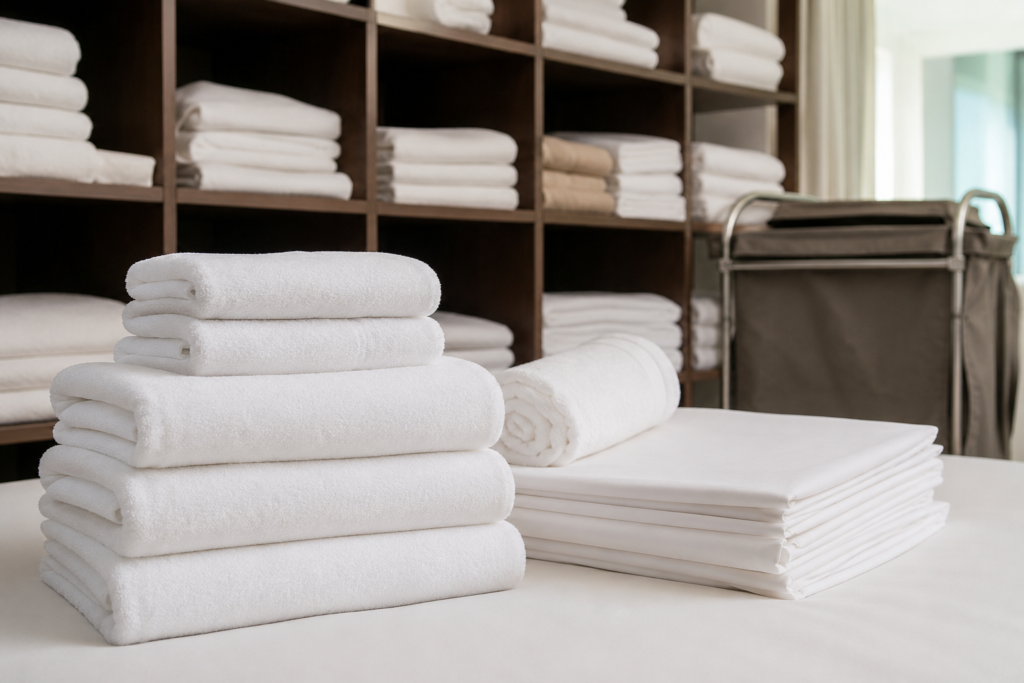
Managing hotel linen effectively is an important part of running a well-organized hospitality operation. Bed sheets, pillowcases, duvet covers, towels, bath mats, and other textiles move through guest rooms, housekeeping areas, laundry facilities, and storage rooms every day.
Without a clear system, hotels can experience unnecessary shortages, excess stock, damaged linen remaining in circulation, or difficulty understanding when products need to be replaced.
Hotel linen inventory management provides a practical framework for tracking, organizing, inspecting, and replenishing these essential textiles.
The right system will vary from one property to another, but the basic principles are useful for hotels, resorts, serviced apartments, guest houses, and other accommodation businesses.
What Is Hotel Linen Inventory Management?
Hotel linen inventory management is the process of monitoring and organizing the textile products a property needs for its daily operations.
It can include:
- Bed sheets
- Pillowcases
- Duvet covers
- Bath towels
- Hand towels
- Bath mats
- Pool towels
- Other hospitality textiles
Inventory management is not simply counting how many pieces are stored in a linen room. It also involves understanding where products are being used, which items are in laundry, which pieces are available for use, and which products need repair or replacement.
A well-organized system gives housekeeping and management teams a clearer picture of the hotel’s actual linen requirements.
Why Hotel Linen Inventory Management Matters
Hotels need enough linen to support occupied rooms while other textiles are being washed, dried, inspected, or stored.
If inventory is too low, housekeeping teams may struggle during busy periods. If the property holds significantly more stock than it needs, storage space and purchasing budgets may be used inefficiently.
Effective inventory management can help hotels:
- Monitor available stock
- Identify shortages
- Reduce unnecessary purchasing
- Track damaged products
- Plan replacement requirements
- Organize housekeeping operations
- Understand recurring linen losses
- Maintain appropriate reserve stock
The objective is not to maintain a particular inventory number simply because another hotel uses it. Each property should determine its requirements based on its own operation.
How to Calculate Hotel Linen Requirements
There is no universal number of linen pieces that every hotel needs.
The appropriate inventory depends on several factors.
Number of Guest Rooms
A larger property will generally require more linen than a smaller one.
However, room count alone does not determine the correct inventory level.
Occupancy Patterns
A hotel with consistently high occupancy may need different stock levels from a property with significant seasonal changes.
Understanding expected occupancy patterns can help managers plan their linen requirements more realistically.
Laundry Turnaround Time
The time required to collect, wash, dry, inspect, and return linen to storage can affect how much usable stock a hotel needs.
Longer turnaround periods may require additional reserve inventory so housekeeping operations can continue without interruption.
Room Configuration
Different room types may require different combinations of sheets, pillowcases, duvet covers, towels, and other textiles.
A hotel should therefore calculate inventory according to its actual room configurations.
Replacement and Loss
Linen can become unsuitable for use because of wear, damage, permanent staining, loss, or other operational factors.
Replacement requirements should be considered when planning inventory rather than treating them as unexpected events.
What Is a Linen Par Level?
A linen par level is a target amount of linen that a hotel aims to maintain for a particular operation.
The appropriate level depends on the property’s room count, occupancy, laundry process, storage capacity, and operating procedures.
For example, a hotel may establish separate target levels for sheets, pillowcases, bath towels, and other textile categories.
The important point is that par levels should reflect the hotel’s actual requirements rather than being copied from another property without evaluation.
How to Organize a Hotel Linen Inventory
A simple organization system can make inventory easier to monitor.
Hotels can separate linen by:
- Product type
- Size
- Room type
- Department
- Clean versus used status
- Condition
For example, king-size sheets can have a dedicated storage location separate from queen-size sheets.
Similarly, bath towels and hand towels can be stored separately so housekeeping teams can locate the correct products efficiently.
Clear labels can make the system easier to understand, particularly when multiple employees work in the linen room.
Keep Clean and Used Linen Separate
One of the basic principles of linen management is keeping clean and used textiles appropriately separated.
Used linen should follow the hotel’s established collection and laundry process, while clean linen should be stored in a suitable environment that protects it from unnecessary contamination, moisture, and dust.
The exact procedures will depend on the hotel’s facilities and operational policies.
Inspect Linen Before Returning It to Stock
Counting linen is only part of inventory control.
Hotels should also monitor condition.
After laundering, staff can check for:
- Remaining visible stains
- Tears
- Loose stitching
- Frayed hems
- Excessive fabric wear
- Discoloration
- Distortion
- Other visible damage
Items that no longer meet the property’s requirements can be separated for appropriate action.
This prevents damaged or unsuitable textiles from being counted as fully usable inventory.
Track Linen Loss and Damage
Linen inventory can change for reasons other than normal wear.
Products may become damaged, permanently stained, misplaced, or otherwise unavailable.
Recording these events can help management identify patterns.
For example, if a particular product repeatedly needs replacement, the hotel can investigate whether the issue relates to product suitability, laundering, handling, storage, or another operational factor.
The purpose of tracking is not simply to record losses. It is to understand why they occur.
Hotel Towel Inventory Management
Towels deserve specific attention because their performance requirements differ from those of bed linen.
Hotels may manage separate stock levels for:
- Bath towels
- Hand towels
- Face towels
- Bath mats
- Pool towels
Inventory teams should monitor both quantity and condition.
A towel that is physically present but no longer suitable for guest use should not be treated as fully usable inventory.
Hotels can therefore combine quantity checks with condition inspections.
How Often Should Hotel Linen Inventory Be Checked?
There is no single checking schedule that is appropriate for every property.
The frequency can depend on:
- Hotel size
- Occupancy
- Linen volume
- Housekeeping procedures
- Laundry turnaround
- Storage capacity
- Historical loss rates
A property with a high volume of daily linen movement may require more frequent monitoring than a smaller operation.
The important objective is to identify shortages, losses, and unusual changes before they disrupt housekeeping operations.
Create a Simple Linen Inventory Record
A basic record can contain information such as:
| Linen type | Size | Usable stock | In laundry | Damaged | Replacement needed |
|---|---|---|---|---|---|
| Bed sheets | King | — | — | — | — |
| Bed sheets | Queen | — | — | — | — |
| Pillowcases | Standard | — | — | — | — |
| Bath towels | Standard | — | — | — | — |
| Hand towels | Standard | — | — | — | — |
The actual figures should come from the hotel’s own inventory system.
For larger operations, digital inventory tools can make tracking easier. Smaller properties may be able to manage the process with a structured spreadsheet or another simple record-keeping method.
Monitor Linen From Purchase to Replacement
A useful inventory system follows linen through its operational lifecycle.
The process can look like this:
Purchase → Receiving → Storage → Guest use → Collection → Laundry → Inspection → Storage → Reuse → Replacement
Each stage provides an opportunity to identify changes in quantity or condition.
Tracking the full cycle can give management a better understanding of how the inventory is performing.
Choosing Hotel Linen for Inventory Efficiency
Inventory management begins with purchasing decisions.
When selecting hotel linen, buyers should consider:
- Fabric composition
- Construction
- Intended use
- Care requirements
- Commercial laundering requirements
- Expected frequency of use
- Product specifications
- Supplier information
- Availability of samples
- Compatibility with the hotel’s operation
A product should not be selected solely because it has a particular appearance or price.
Hotels should consider whether the textile is appropriate for the environment in which it will actually be used and maintained.
Businesses researching hotel and hospitality linen can explore Atlas Indus Linen for information about available linen solutions:
How to Improve Linen Inventory Control
Hotels can strengthen their inventory process by creating consistent procedures.
Standardize Product Categories
Use consistent names and categories for sheets, towels, pillowcases, and other products.
Assign Clear Storage Locations
Make it easy for housekeeping employees to find the correct linen.
Record Damaged Products
Do not count unusable pieces as fully available stock.
Monitor Recurring Shortages
If a particular product is repeatedly unavailable, investigate the reason.
Review Inventory Data
Regular reviews can reveal changes in usage, loss, or replacement requirements.
Coordinate Housekeeping and Laundry Teams
Inventory information becomes more useful when the teams responsible for rooms, laundry, and storage communicate effectively.
Common Hotel Linen Inventory Mistakes
Counting Damaged Linen as Usable Stock
A physical count can be misleading if damaged products are included as fully usable inventory.
Using the Same Stock Target for Every Hotel
Different properties have different room configurations, occupancy patterns, and laundry processes.
Ignoring Linen in the Laundry Cycle
Inventory should account for products that are temporarily unavailable because they are being processed.
Failing to Record Losses
Unexplained inventory changes make future purchasing decisions more difficult.
Overlooking Product-Specific Requirements
Different textiles may have different care and handling instructions.
Purchasing Without Reviewing Actual Usage
Historical inventory information can help buyers understand which products are genuinely needed.
When Should Hotels Reorder Linen?
Reordering should be based on the hotel’s actual inventory position and expected operational requirements.
Useful considerations include:
- Current usable stock
- Linen currently in laundry
- Damaged or unusable inventory
- Expected occupancy
- Seasonal demand
- Supplier lead time
- Upcoming room additions or renovations
- Historical usage and replacement patterns
Instead of waiting until stock becomes critically low, hotels can establish internal reorder points appropriate to their operation.
A Practical Hotel Linen Inventory Checklist
Hotels can use the following checklist as a starting point:
- Review current usable linen.
- Separate damaged or unsuitable products.
- Check linen currently in the laundry cycle.
- Confirm stock by product type and size.
- Review upcoming occupancy requirements.
- Compare current inventory with internal target levels.
- Record losses and recurring damage.
- Identify products approaching replacement.
- Review supplier lead times.
- Plan purchases based on actual operational requirements.
- Update inventory records after receiving new stock.
The checklist should be adapted to the hotel’s own procedures and textile categories.
Final Thoughts
Hotel linen inventory management is about maintaining the right information as much as maintaining the right quantity of products.
Hotels need to know what they have, where it is, what condition it is in, what is currently being processed, and what may need to be replaced.
A practical inventory system combines counting with inspection, organization, record keeping, and communication between housekeeping, laundry, purchasing, and management teams.
There is no universal inventory formula that works for every property. The best system is one built around the hotel’s actual room configuration, occupancy patterns, laundry process, storage capacity, and operational requirements.
For hotels reviewing their textile inventory, choosing appropriate products is an important starting point. Businesses can explore Atlas Indus Linen and compare hospitality linen options according to their specific requirements.
A consistent approach to purchasing, tracking, inspecting, storing, and replacing linen can help hospitality teams manage their textile resources more effectively while maintaining the standards expected by their guests.