
Hotel Linen Care After Commercial Washing: A Practical Guide
Hotel linen goes through a demanding cycle of washing, drying, handling, storage, and repeated use. For hotels, resorts, serviced apartments, and other hospitality businesses, maintaining linen quality is not simply about keeping sheets and towels clean. Proper care after commercial washing can also help protect fabric condition, maintain presentation, and identify worn items before they become a larger operational problem.
Hotel linen care after commercial washing starts as soon as the washing cycle is complete. How linen is dried, inspected, handled, folded, stored, and rotated can all affect its ongoing condition.
This guide explains practical ways hospitality teams can care for hotel bed linen and towels after commercial laundering while following the care requirements of the specific textile.
Why Hotel Linen Needs Proper Care After Commercial Washing
Commercial laundry processes are designed to handle large volumes of hospitality textiles. Hotel sheets, pillowcases, duvet covers, towels, and other linen may be washed frequently and exposed to mechanical action, detergents, heat, and drying processes.
The exact effect depends on the fabric, construction, laundering process, and manufacturer’s care instructions. That is why there is no single washing or drying method that is appropriate for every type of hotel linen.
Post-wash handling is another important part of the process.
Linen that has been properly washed can still develop problems if it is stored while damp, handled carelessly, exposed unnecessarily to heat, or returned to service without inspection.
A consistent post-wash routine helps housekeeping and laundry teams identify issues early and maintain better control over linen inventory.
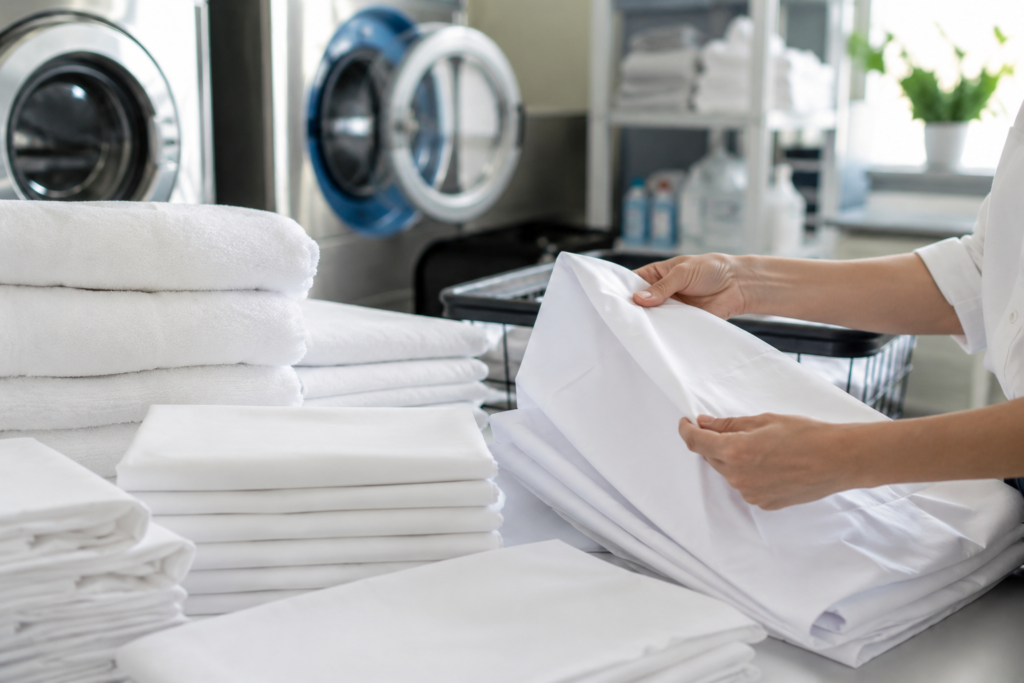
How to Handle Hotel Linen Immediately After Washing
The period immediately after washing is an important part of hotel linen maintenance.
Remove Linen From the Laundry Process Promptly
Clean textiles should be handled according to the laundry facility’s established procedures rather than being left in an unsuitable environment for longer than necessary.
Prompt handling can help the team move clean linen efficiently toward drying, finishing, inspection, and storage.
Separate Linen by Type
Hotel laundry commonly includes several different textile categories, such as:
- Bed sheets
- Pillowcases
- Duvet covers
- Bath towels
- Hand towels
- Bath mats
- Other guest-room textiles
Separating items by type makes inspection, folding, storage, and inventory management easier.
It also helps teams apply the appropriate care requirements to different textile products.
Inspect Before Folding and Storage
A quick inspection can identify:
- Remaining visible stains
- Fabric damage
- Loose stitching
- Frayed hems
- Tears
- Excessive thinning
- Unusual discoloration
- Distortion or shrinkage
Items that do not meet the hotel’s cleanliness or quality standards should be handled according to the property’s laundry and replacement procedures.
Proper Drying Practices for Hotel Linen
Drying is a major part of post-wash linen care.
The correct drying process depends on the textile and its manufacturer’s instructions. Hotel teams should avoid assuming that the same heat level or drying duration is suitable for every product.
Avoid Unnecessary Over-Drying
Excessive heat or prolonged drying can place additional stress on some textile materials.
The goal should be to achieve the required dryness while following the care instructions supplied for the particular linen.
This is especially important when a hotel uses several different fabric constructions or blends.
Follow Manufacturer Care Instructions
Care labels and supplier specifications should take priority over generic laundry advice.
When purchasing hotel linen, hospitality buyers should keep the recommended washing and drying requirements available for laundry and housekeeping teams.
This creates a more consistent process and reduces the risk of applying unsuitable treatment to a particular textile.
Make Sure Linen Is Fully Dry Before Storage
Clean linen should be properly dried before it is placed into storage.
Storing damp textiles can create avoidable moisture-related problems and may compromise the condition of otherwise clean linen.
For this reason, dryness should be one of the checks completed before clean stock enters the linen room.
How to Inspect Hotel Linen After Commercial Washing
Inspection should be a routine part of hotel linen management rather than something done only when a guest complaint occurs.
A simple inspection system can help housekeeping teams identify recurring laundry or textile problems.
Check Cleanliness
Look for remaining visible soil, stains, or other signs that the item requires additional processing according to the property’s procedures.
Check Fabric Condition
Look for signs of excessive wear, thinning, holes, or other physical damage.
A single damaged item does not necessarily indicate a problem with the entire laundry process. However, repeated damage across similar products may justify reviewing the laundering and handling procedures.
Check Seams and Hems
Seams and hems can experience repeated stress during use and laundering.
Inspect for:
- Loose threads
- Open seams
- Fraying
- Separation
- Other visible construction problems
Early identification allows the hotel to remove unsuitable pieces from guest use before the condition becomes more noticeable.
Check Towels for Condition and Absorbency
Towels have different performance requirements from bed linen.
In addition to checking cleanliness and physical condition, housekeeping teams can monitor whether towels continue to provide the level of absorbency expected for their intended use.
If a recurring reduction in towel performance is noticed, the hotel can investigate the textile, laundering process, drying process, and product specifications rather than assuming one cause.
How to Store Hotel Linen After Washing
Proper storage protects the work already completed during the laundry process.
Store Only Fully Dry Linen
Before clean linen enters storage, confirm that it is properly dry.
This simple step should be part of the property’s normal linen-room procedure.
Keep Clean Linen Protected
Clean textiles should be stored in an environment that protects them from unnecessary exposure to dust, moisture, and other sources of contamination.
The exact storage arrangement will depend on the hotel’s facilities and operating procedures.
Organize Linen by Type and Size
A well-organized linen room makes it easier for housekeeping staff to find the correct items and maintain inventory.
For example, separate storage areas can be used for:
- King-size sheets
- Queen-size sheets
- Pillowcases
- Duvet covers
- Bath towels
- Hand towels
- Bath mats
Clear organization can also make stock checks more efficient.
Rotate Usable Linen
Hotels can use an appropriate stock rotation system so that usable linen is distributed consistently rather than allowing some pieces to remain unused for long periods.
A rotation process should work alongside the hotel’s existing inventory and housekeeping procedures.
How to Extend the Useful Life of Hotel Linen
There is no universal lifespan that applies to every hotel textile.
Useful life can vary according to fabric construction, frequency of use, laundering conditions, drying methods, handling, and other operational factors.
However, consistent care can help hotels manage their linen more effectively.
Important areas include:
Use Appropriate Laundry Procedures
Follow the textile manufacturer’s recommendations and the laundry facility’s established procedures.
Avoid applying a one-size-fits-all process to different materials.
Handle Clean Linen Carefully
Clean linen should be handled in a way that minimizes unnecessary pulling, dragging, contamination, or rough treatment.
Inspect Linen Regularly
Routine inspection helps identify wear before damaged pieces continue circulating through the operation.
Maintain Proper Storage
Clean, dry, organized storage makes it easier to protect linen and manage inventory.
Track Recurring Problems
If several items from the same product group develop similar problems, record the issue and investigate possible causes.
For example, repeated seam damage could warrant a review of handling or product construction, while recurring discoloration might require an assessment of the laundering process.
Common Hotel Linen Care Mistakes After Washing
Even an effective commercial laundry operation can lose efficiency when post-wash handling is inconsistent.
Storing Linen Before It Is Fully Dry
Moisture should not be trapped inside stored textiles.
Make dryness a standard check before placing linen into storage.
Ignoring Small Signs of Damage
Loose stitching, thinning fabric, or damaged hems can become more serious with continued use.
Recording these issues helps housekeeping teams make better decisions about repair, removal, or replacement.
Mixing Different Textile Requirements
Different products may have different care requirements.
Bed sheets, towels, bath mats, and specialty textiles should not automatically be treated as though they are identical.
Overlooking Manufacturer Instructions
Generic laundry advice cannot replace the care instructions supplied for a specific product.
When there is uncertainty, consult the manufacturer’s recommendations.
Failing to Monitor Recurring Issues
If the same type of damage repeatedly appears after laundering, simply replacing individual items may not solve the underlying problem.
Hotels should consider whether the issue relates to the product, laundry process, drying, handling, storage, or another stage of the linen cycle.
When Should Hotel Linen Be Replaced?
Hotels should avoid relying on an arbitrary replacement schedule for every textile.
Instead, replacement decisions can consider the actual condition and performance of the item.
Factors may include:
- Visible damage
- Excessive fabric wear
- Persistent staining
- Damaged seams or hems
- Loss of expected towel absorbency
- Poor guest-facing appearance
- Changes in fabric shape or construction
- Hygiene or operational requirements
- Manufacturer recommendations
- Cost-effectiveness of continued use
A structured inspection process makes these decisions more consistent.
Hotel Linen Care Checklist After Commercial Washing
Before clean linen goes back into circulation, housekeeping or laundry teams can use a simple checklist:
- Check that the item is clean.
- Confirm that it is fully dry.
- Inspect fabric condition.
- Check seams and hems.
- Look for stains or discoloration.
- Check towels for expected absorbency and condition.
- Separate damaged or unsuitable pieces.
- Fold and organize linen appropriately.
- Store clean linen in a protected area.
- Rotate usable stock according to the hotel’s inventory procedure.
- Record recurring quality problems for further investigation.
The checklist can be adapted to the hotel’s textile types and operating procedures.
Choosing Hotel Linen for Commercial Laundry
Good post-wash care starts with choosing linen that is appropriate for its intended hospitality environment.
Hotels purchasing new linen should consider more than appearance alone.
Important questions include:
What Is the Fabric and Construction?
Understand the material, construction, and intended use of the product.
Is It Suitable for Hospitality Use?
Hotel linen can face significantly more frequent laundering than household textiles. Buyers should consider whether the product is designed for the intended operating environment.
What Are the Care Requirements?
Ask the supplier for clear washing, drying, and handling recommendations.
Is the Product Appropriate for the Hotel’s Laundry Process?
A linen product should be evaluated against the hotel’s actual laundering and drying setup.
Can the Supplier Provide Product Information or Samples?
Samples can allow purchasing and housekeeping teams to assess the product before committing to a larger order.
For hospitality businesses reviewing linen options, working with an experienced supplier can make it easier to match products with the property’s operational requirements.
Frequently Asked Questions
How should hotel linen be handled after commercial washing?
Hotel linen should be handled according to its specific care instructions and the hotel’s laundry procedures. After washing, it should be properly dried, inspected, organized, and stored before returning to service.
Should hotel linen be completely dry before storage?
Yes. Clean linen should be properly dry before storage. This helps prevent moisture from becoming trapped in stored textiles.
How can hotels reduce damage to linen during repeated washing?
Hotels can follow manufacturer care instructions, use appropriate laundering and drying procedures, handle textiles carefully, inspect linen regularly, and investigate recurring damage rather than treating every damaged item as an isolated incident.
How should hotel towels be checked after washing?
Check towels for cleanliness, physical damage, excessive wear, discoloration, and whether they continue to provide the expected absorbency for their intended use.
When should hotel linen be removed from service?
Linen should be considered for removal when its condition, cleanliness, appearance, construction, or performance no longer meets the hotel’s requirements.
How should clean hotel linen be stored?
Clean linen should be fully dry and stored in a clean, organized environment that protects it from unnecessary moisture, dust, and contamination.
Conclusion
Hotel linen care after commercial washing is an ongoing process rather than a single laundry step.
Proper drying, inspection, handling, storage, rotation, and monitoring can help hospitality teams maintain linen quality and make better decisions about when items should remain in service or be replaced.
The most effective approach is not to apply one universal care routine to every textile. Instead, hotels should combine the manufacturer’s care instructions with their own laundry, housekeeping, storage, and inventory procedures.
For hotels and hospitality businesses, choosing suitable linen from the beginning also matters. Products should be evaluated according to their intended use, construction, care requirements, and compatibility with the property’s laundering process.
By treating linen care as part of the complete hospitality operation—not simply as a washing task—hotels can build a more consistent and practical approach to managing their textile inventory.