Office No. 203, 2nd Floor, Plaza No. 100, Sector Business District North, Phase 8, Bahria Town, Rawalpindi.

Atlas Indus Linen

What Tog Duvet Do Hotels Use
Atlas Indus Linen

What Tog Duvet Do Hotels Use? A Practical Guide

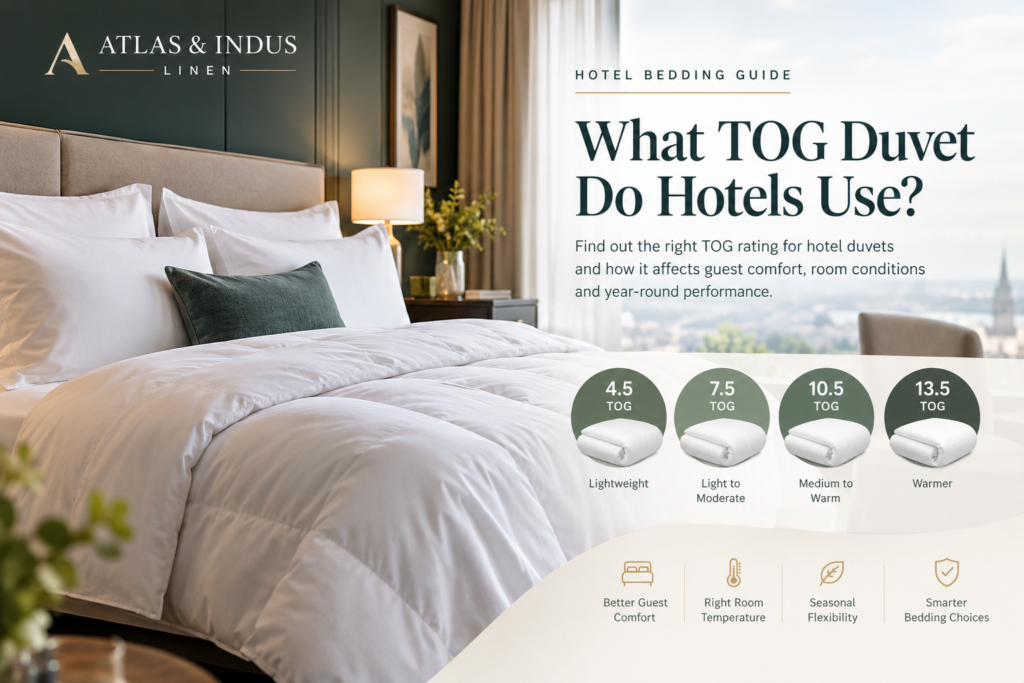
What Tog Duvet Do Hotels Use? Many UK hotels use a 10.5 TOG duvet because it offers a practical balance of warmth for different guests and seasons. However, not every hotel uses the same rating. Some choose lighter 4.5 TOG duvets for warmer rooms, while others use warmer duvets during colder months. The right choice depends on room temperature, climate, guest comfort, filling material, and laundry requirements. For hotels, resorts, and riads, choosing the right duvet means finding a balance between a comfortable night’s sleep and practical daily management. If you are choosing bedding for a hospitality business, understanding TOG ratings can help you compare duvet options and build a bedding specification that suits your rooms. What Does TOG Mean in a Duvet? TOG stands for Thermal Overall Grade. It measures how well a duvet resists the transfer of heat and indicates its insulating ability. In simple terms, a higher TOG rating generally means a warmer duvet. A lower rating means the duvet provides less insulation. For example, a 4.5 TOG duvet is a lightweight option, while a 13.5 TOG duvet is designed to provide more warmth. TOG measures warmth, not overall product quality. It does not tell you whether a duvet has a soft cover, high-quality filling, strong stitching, or a long service life. You can learn more about this measurement in JYSK’s duvet TOG guide. It is also important to remember that TOG is commonly used in the UK bedding market. In other markets, suppliers may describe duvet warmth through filling weight, fill power, product construction, or other specifications. These measurements are not directly interchangeable with TOG. What TOG Duvet Do Different Hotels Use? Hotels choose duvet ratings according to their room conditions, target guests, and operating needs. The following table provides a general guide to common ratings. It is not an official hotel classification or a universal purchasing standard. Duvet rating General warmth level Where it may be suitable 4.5 TOG Lightweight Warm rooms, summer use, or guests who prefer less insulation 7.5 TOG Light to moderate Mild conditions and rooms that do not need heavy insulation 10.5 TOG Medium to warm A versatile option for many temperature-controlled hotel rooms 13.5 TOG Warmer Colder rooms, colder seasons, or guests who need more insulation These descriptions are general guidelines. The warmth a guest experiences also depends on the filling, the bedroom temperature, the mattress, other bedding layers, and personal preference. Why Is 10.5 TOG Common in Hotels? A 10.5 TOG duvet can be a practical choice because it offers moderate-to-high insulation without being as warm as many winter-weight options. Some hotels prefer one main rating throughout the year because it simplifies purchasing, storage, and housekeeping. A consistent duvet specification can also help rooms maintain a similar feel. However, a 10.5 TOG duvet will not suit every guest or every climate. A well-heated room may need a lighter duvet, while a cooler room may need additional insulation. The best choice comes from testing the duvet in the conditions where guests will use it. Do All Luxury Hotels Use 10.5 TOG Duvets? No. Some luxury hotels use 10.5 TOG duvets, but luxury hotels do not follow one universal TOG rule. A hotel’s choice may depend on the filling, room temperature, bedding design, guest preferences, and the level of warmth it wants to provide. Some properties use lighter duvets and offer extra blankets. Others change duvet ratings by season or provide alternatives for guests. Luxury also depends on more than TOG. The quality of the filling, the duvet’s construction, the feel of the fabric, and how well the duvet fits inside its cover all affect the guest experience. A higher TOG rating does not automatically make a duvet more luxurious. How Should Hotels Choose the Right Duvet TOG Rating? Hotels should start with their actual room conditions rather than choosing a rating simply because other hotels use it. 1. Consider the Room Temperature Room temperature is one of the most important factors. A hotel with reliable heating and cooling may be able to use a consistent duvet rating throughout much of the year. A property with rooms that become cold in winter or warm in summer may need lighter and warmer options. Before buying in bulk, consider the temperature guests usually experience at night. Test the proposed duvet in representative rooms rather than relying only on the product description. 2. Match the Duvet to the Local Climate A duvet that works well in a cool UK hotel may not suit a warm-climate property. For hotels in warmer destinations, consider whether a lower-insulation duvet would be more comfortable, especially in rooms that remain warm at night. Air conditioning can also affect the choice. For properties in colder destinations, a warmer duvet may be more suitable during winter. Some hotels maintain different options for different seasons. There is no single best TOG rating for every country. Choose according to the room environment, not the destination’s name alone. 3. Think About Your Guests Guests do not all feel temperature in the same way. Some prefer a cool, lightweight cover, while others like a warmer duvet. Hotels cannot meet every preference with one product, but they can reduce problems by selecting a suitable main rating and considering a practical alternative. Possible approaches include keeping extra blankets available, offering lighter duvets on request, or using seasonal bedding where operationally practical. The goal is to provide comfortable choices without making housekeeping unnecessarily complicated. 4. Choose the Right Filling Material TOG does not tell you what a duvet is made from. Hotels should compare the filling as well as the warmth rating. Synthetic filling: Hollowfibre and microfibre duvets are common options for properties that need practical care and predictable purchasing. Their washing requirements depend on the product, so check the care label. Down and feather filling: These natural fillings are used in some premium hotel duvets. They can provide a different balance of softness, loft, weight, and insulation. Quality varies, and these products may have different care
How to Customize Hotel Linen With a Logo
Atlas Indus Linen

How to Customize Hotel Linen With a Logo: 6 Key Steps

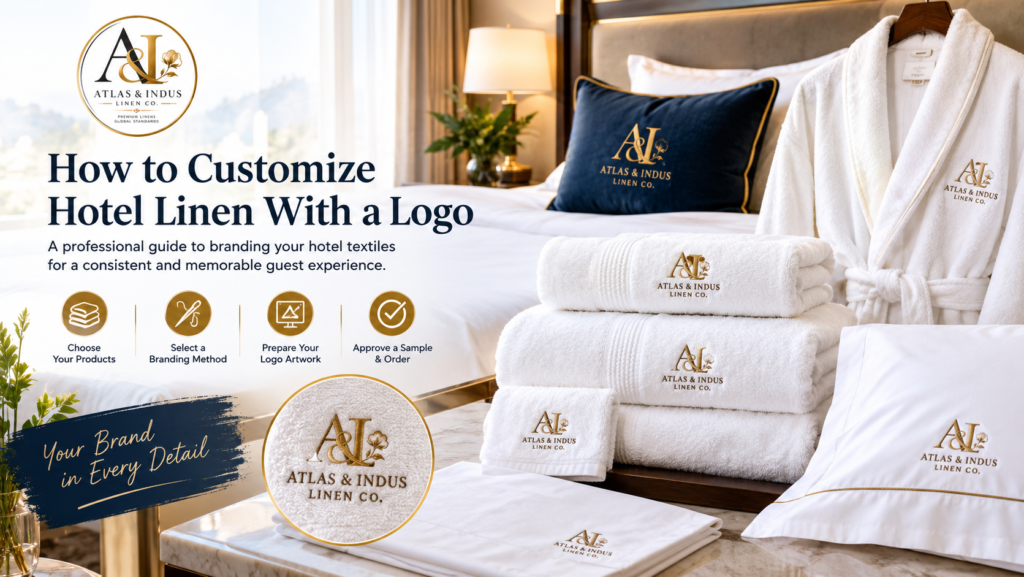
How to Customize Hotel Linen With a Logo To customize hotel linen with a logo, first choose the textiles you want to brand, such as towels, bathrobes, pillowcases, or other hotel linen. Then select a suitable method, such as embroidery, a woven design, a label, or fabric printing. Prepare your logo artwork, agree on its size and placement, and approve a sample before placing a bulk order. This process helps hotels, resorts, and riads create a consistent brand image while making sure their textiles remain suitable for guest use and regular laundry. Branded hotel linen can add a personal touch to guest rooms, bathrooms, spas, and other hospitality spaces. However, a good result depends on more than adding a logo. You also need to consider fabric type, comfort, appearance, washing requirements, order quantity, and cost. What Is Custom Hotel Linen? Custom hotel linen is made or finished to meet a property’s specific requirements. These requirements may include fabric, dimensions, colour, finish, packaging, and branding. Adding a logo is one way to customise hospitality textiles. Depending on the product and supplier, a hotel may choose embroidered initials, a full logo, a woven design, or a branded label. Hotels use branded textiles to create a consistent appearance across guest rooms and shared spaces. For example, a boutique hotel may add a small logo to its towels and bathrobes, while a resort may prefer subtle branding that matches its overall design. The aim is to make the textiles feel like part of the property rather than ordinary products with a large promotional mark. Which Hotel Linen Products Can Have a Logo? Start by deciding where branding would be useful. Not every textile needs a visible logo, and some products may be better suited to discreet branding. Hotel textile Possible logo placement What to consider Bath towels Lower border or corner Keep the logo clear and comfortable against the skin Hand towels Lower hem or corner Use a size that suits the smaller fabric area Bathrobes Chest area or another agreed position Check comfort, appearance, and placement when worn Pillowcases Edge or hem Avoid a position that could affect sleeping comfort Bed sheets Hem or discreet edge Consider how the logo appears when the bed is made Duvet covers Lower edge or another agreed position Check visibility, washing, and finishing Table linen Corner or border Match the logo position to the table setting These are possible placements, not fixed industry rules. The best location depends on the product, design, construction, and intended use. Before ordering, ask the supplier which branding methods are suitable for each item. A method that works well on a bathrobe may not produce the same result on a textured towel or lightweight bedsheet. What Are the Best Ways to Add a Logo to Hotel Linen? There are several ways to brand hospitality textiles. Each method has different costs, visual effects, and production requirements. 1. Logo Embroidery Embroidery adds a logo or design to fabric with stitches. It is a popular option for towels, bathrobes, pillowcases, and selected other textiles. Hotels may choose embroidery for initials, simple symbols, crests, or logos that suit the available stitching area. Advantages: Things to check: Ask for a sample on the actual fabric before approving the design. 2. Woven Logos A woven logo becomes part of the fabric design during weaving. Depending on the product and production method, the logo may be woven into a border or another section of the textile. This option may suit hotels that want a coordinated design across selected products. Woven branding often requires specific production preparation. Minimum quantities and setup costs may also apply, so it is worth discussing this option early in the ordering process. Ask the supplier whether the design can be woven into the selected product and what order quantity is required. 3. Branded Labels A woven or printed label can display a hotel name or brand mark. Labels may work well for discreet branding or for identifying products. However, labels can differ in their position, feel, and construction. A label placed where it rubs against the guest’s skin may reduce comfort. Ask about label material, edge finishing, attachment, and resistance to repeated washing. Choose a location that does not interfere with the product’s intended use. 4. Fabric Printing Some suppliers offer printing for selected textile products. The appearance and durability depend on the printing method, fabric, ink or other materials used, and care process. Printing may suit designs with colour or detail that would be difficult to achieve through other methods. However, do not assume it will perform equally well on every towel, robe, or bedsheet. Ask the supplier to confirm whether printing is suitable for the exact textile and whether it can withstand the hotel’s regular washing routine. Which Method Should You Choose? Use this simple comparison as a starting point. Method May suit Main consideration Embroidery Towels, robes, and selected bedding Stitch detail, fabric feel, and laundry performance Woven design Products designed with a woven logo or border Production setup and minimum quantity Label Discreet branding and product identification Comfort, placement, and attachment Printing Suitable textiles requiring a printed design Method-specific wash performance and fabric compatibility No method is best for every hotel. Compare the visual result, product suitability, cost, and expected use before choosing. How Do You Prepare Your Hotel Logo for Custom Linen? A clear logo file helps the supplier assess whether the design can be reproduced accurately. Provide a High-Quality Logo File Ask your designer for a vector version of the logo if one is available. Vector artwork can be resized without the same loss of sharpness that often occurs when a small pixel-based image is enlarged. Common vector formats include AI, SVG, EPS, and vector PDF, but you should confirm which formats your supplier accepts. Adobe explains the difference in its guide to vector and raster image files. If you only have a low-resolution image, send it to the supplier for review. They may need a cleaner file

How to Choose Tablecloth Size for a Rectangular Table
Atlas Indus Linen

How to Choose Tablecloth Size for a Rectangular Table

How to Choose Tablecloth Size for a Rectangular Table To choose the right tablecloth size for a rectangular table, measure the tabletop’s length and width, then add twice your preferred drop to each measurement. The drop is the fabric that hangs over each edge. For example, a 180 × 90 cm table with a 20 cm drop needs a tablecloth measuring 220 × 130 cm. This simple method helps homeowners, hotels, and restaurants choose a tablecloth that fits properly, looks neat, and suits the way they use the table. For hospitality businesses, getting the size right also helps create a consistent dining setup. The key is to measure the actual table, choose the right amount of overhang, and check the finished tablecloth dimensions before ordering. What Size Tablecloth Do You Need for a Rectangular Table? The right size depends on two things: the size of the tabletop and how far you want the fabric to hang down. Use this formula: Tablecloth length = Table length + (2 × drop) Tablecloth width = Table width + (2 × drop) You multiply the drop by two because the fabric hangs over two opposite edges. You add the drop to the length and width separately. Example: A 180 × 90 cm Table Suppose your rectangular table is 180 cm long and 90 cm wide. You want the cloth to hang 20 cm over each edge. You need a 220 × 130 cm tablecloth for an even 20 cm drop on all four sides. Use the same calculation in inches. Just keep your measurements in one unit throughout the calculation. Rectangular Tablecloth Size Chart Use this chart as a starting point for common rectangular table dimensions. The recommended sizes are calculated from the selected drop, not from a universal tablecloth standard. Table dimensions Drop on each side Calculated tablecloth size 120 × 75 cm 15 cm 150 × 105 cm 150 × 75 cm 20 cm 190 × 115 cm 180 × 90 cm 20 cm 220 × 130 cm 200 × 100 cm 25 cm 250 × 150 cm 48 × 30 inches 8 inches 64 × 46 inches 60 × 30 inches 8 inches 76 × 46 inches 72 × 30 inches 8 inches 88 × 46 inches 72 × 36 inches 10 inches 92 × 56 inches These are calculated dimensions, not a list of guaranteed off-the-shelf sizes. Available tablecloth sizes differ between suppliers, so you may need to select the closest suitable size or request a custom size. Also check how the supplier displays dimensions. Some list width first, while others list length first. Confirm both measurements before placing an order. How Much Should a Tablecloth Hang Over the Edge? The amount of fabric hanging below the tabletop is called the tablecloth drop. There is no single ideal drop for every table. It depends on the setting, table height, preferred appearance, and how people use the table. Here are practical starting ranges: Setting Suggested drop on each side Casual dining 15–20 cm (6–8 inches) Everyday restaurant dining 20–25 cm (8–10 inches) Formal dining 25–30 cm (10–12 inches) Floor-length setup Measure the distance from the tabletop to the desired bottom edge These ranges are guidelines rather than fixed rules. A shorter drop gives a simple, practical look. A longer drop creates a more formal appearance. Is a Longer Drop Always Better? No. A longer drop may suit a banquet or formal event, but it can interfere with chairs or fall into guests’ laps if you choose the wrong length. For a restaurant, consider how guests sit, how staff serve food, and how often tables need cleaning. The tablecloth should look attractive without making everyday service difficult. For floor-length coverage, measure the table height and decide how close the cloth should come to the floor. Leave a small clearance if you want to prevent the fabric from dragging. Calculate the finished cloth dimensions using that chosen drop. How to Measure a Rectangular Table Correctly Accurate measurements help you avoid ordering a cloth that is too short or too large. Follow these steps before buying. 1. Measure the Table’s Length Place a tape measure along the longest edge of the tabletop. Measure from one end to the other. Measure the table itself, not an old tablecloth. An existing cloth may have stretched, shrunk, or been made for a different drop. 2. Measure the Table’s Width Measure across the shorter side of the tabletop, from one edge to the opposite edge. Record both dimensions clearly. For example, write down “180 cm long × 90 cm wide” rather than recording just one number. 3. Decide on the Drop Choose how far you want the cloth to hang on each side. Consider the setting, the height of the table, the position of chairs, and the appearance you want. If the table is used for daily dining, a moderate drop may be easier to manage. For an event, you may prefer a longer drop. 4. Calculate the Finished Size Add twice your selected drop to the table’s length and width. For example, a 200 × 100 cm table with a 25 cm drop needs a 250 × 150 cm tablecloth. 5. Compare the Result With Available Sizes Check the supplier’s size chart. Choose a cloth that gives a suitable drop on both dimensions. Do not assume a tablecloth will fit because the product listing says it seats six or eight people. Tables with the same seating capacity can have different dimensions. For an additional explanation of measuring a table and choosing an overhang, see Wayfair’s guide to selecting the correct tablecloth size. How to Choose Tablecloth Size for a Hotel or Restaurant Hotels, restaurants, and event venues may use many tables across different rooms. A consistent sizing plan can make ordering and table setup easier. Group Tables by Their Dimensions Start by recording the dimensions of every table type. Group tables that share the same length and width. If a venue has several table sizes, make

Is linen better than cotton
Atlas Indus Linen

Is Linen Better Than Cotton? 7 Key Differences for Bedding

Is Linen Better Than Cotton? 7 Key Differences for Bedding Is linen better than cotton? Neither fabric is always better. Linen made from flax often feels cooler, has a relaxed texture, and can last a long time when properly made and cared for. Cotton usually feels smoother from the start, offers many fabric options, and is often easier to manage in daily use. The right choice depends on your comfort, climate, budget, and washing routine. For hotels, resorts, and riads, these factors also affect guest satisfaction and linen replacement costs. One important distinction: in this article, linen means fabric made from the flax plant. The word bed linen can also refer to sheets, pillowcases, and other bedding made from cotton or other materials. What Is the Difference Between Linen and Cotton? Linen and cotton are natural plant-based fibres, but they come from different plants. Linen is made from the fibres of the flax plant. It often has a slightly textured feel and a relaxed, natural appearance. Linen can become softer with use and washing, depending on its construction and finish. Cotton comes from the fibres surrounding the seeds of the cotton plant. It is widely used for bedsheets, pillowcases, towels, and other textiles. Cotton fabrics can feel crisp, smooth, soft, or silky, depending on the fibre quality, yarn, weave, and finishing. Both materials can make comfortable bedding. Their performance depends on more than the fibre name alone. Linen vs Cotton: A Quick Comparison Feature Linen Cotton Fibre source Flax plant Cotton plant Feel Often crisp and textured at first Often smoother and softer from the start Breathability Can allow good airflow, depending on weave and weight Also breathable, with performance depending on construction Moisture handling Can absorb moisture and release it effectively Absorbs moisture; drying speed depends on fabric construction Appearance Naturally relaxed and more visibly wrinkled Available in many finishes, from crisp to smooth Durability Strong flax fibres can support long service life Quality cotton can also be very durable Care Can wrinkle easily and may shrink if washed incorrectly Can also wrinkle and shrink; care depends on the fabric Price Often more expensive Available across a wide range of budgets Best fit People who like a relaxed feel and natural texture People who want versatile fabric options and a smoother feel This table describes common tendencies, not guarantees. A well-made cotton sheet may outperform a poorly made linen sheet. Fibre quality, yarn construction, fabric weight, weaving, finishing, and care all matter. 1. Which Is More Comfortable: Linen or Cotton? Comfort depends on personal preference. Linen often feels crisp and slightly textured when new. Some people enjoy its natural character, while others prefer a smoother fabric. Linen may soften over time, but the final feel depends on its quality and finish. Cotton is available in a wider range of textures. Some cotton sheets feel crisp and fresh, while others feel smooth and soft against the skin. For example, cotton percale typically has a crisp, matte feel. Cotton sateen usually feels smoother and has a gentle sheen. Choose linen if you enjoy a relaxed, textured feel. Choose cotton if you prefer a smoother surface or want more options in fabric finish. For hotel owners, it is worth testing fabric samples before selecting a material for every room. Personal comfort is difficult to judge from a product description alone. 2. Is Linen Cooler Than Cotton? Linen often feels cool against the skin, especially in warm weather. Its fabric construction can allow good airflow, and it can manage moisture in ways that many sleepers find comfortable. Cotton can also be cool and breathable. Lightweight cotton percale, for example, can work well for people who prefer crisp sheets and good airflow. The important point is that the fibre alone does not determine how cool a bedsheet feels. Fabric weight, weave, yarn, finishing, room temperature, and bedding layers also affect comfort. For hot climates, compare lightweight linen with lightweight cotton rather than comparing a thin linen sheet with a heavy cotton sheet. For hotel rooms in warm destinations, test the actual fabric under the property’s expected sleeping conditions. This gives you a better basis for choosing than relying on the material name alone. 3. Which Fabric Is More Durable? Linen fibres are known for their strength, and a well-made linen fabric can provide a long service life. Linen may therefore appeal to buyers who value durability and its natural appearance. However, cotton can also perform well over repeated use and washing. Its durability depends on factors such as fibre length, yarn quality, fabric construction, finishing, and care. For example, cotton made from longer fibres can produce strong, smooth yarns. A poorly constructed fabric made from either material may wear out sooner than expected. For hotels and resorts, durability should be judged by the complete product rather than the fibre alone. Before buying, ask the supplier about: If possible, wash and inspect samples using a process similar to the property’s normal laundry routine. 4. Does Linen Wrinkle More Than Cotton? Yes, linen generally wrinkles more visibly than many cotton fabrics. This is part of its familiar relaxed appearance, but it may not suit every room style or housekeeping routine. Cotton also wrinkles, but the result varies by weave, finish, and fibre blend. Some cotton sheets are easier to smooth and present neatly after washing. For a boutique property with a natural, relaxed design, linen’s wrinkles may complement the room. For a hotel that prefers a crisp, highly uniform bed presentation, cotton may be a more practical option, depending on the selected construction and laundry process. Neither fabric removes the need for proper care. Always follow the manufacturer’s instructions to help limit shrinkage, damage, and unnecessary wear. 5. Which Is Easier to Wash and Maintain? Both linen and cotton need appropriate washing and drying. Neither material should be treated as completely care-free. Linen can crease easily, and some linen products may shrink if exposed to unsuitable washing or drying conditions. Cotton may also shrink, fade,

What Size Are Hotel Bath Mats?
Atlas Indus Linen

What Size Are Hotel Bath Mats? 5 Practical Sizing Tips

What Size Are Hotel Bath Mats? Hotel bath mats commonly come in sizes such as 40 × 60 cm (about 16 × 24 inches), 50 × 80 cm (about 20 × 31.5 inches), and 60 × 90 cm (about 24 × 35.5 inches). A 50 × 80 cm bath mat is a useful starting point for many standard hotel bathrooms, while a larger mat may suit a spacious bathroom or a wide shower area. The best size depends on the available floor space, the bath or shower layout, guest comfort, and the hotel’s laundry needs. Choosing the right hotel bath mat helps guests step onto a comfortable surface after bathing. It also helps housekeeping maintain a neat, consistent bathroom setup. For hotels, resorts, riads, and boutique properties, the goal is to choose a size that fits the room, absorbs water effectively, and remains practical to wash and replace. What Are the Common Hotel Bath Mat Sizes? Hotel bath mats are available in several sizes. There is no single size that every hotel must use, so check the supplier’s measurements before placing a bulk order. Bath mat size Approximate size in inches Best suited for 40 × 60 cm 16 × 24 inches Compact bathrooms and smaller step-out areas 50 × 80 cm 20 × 31.5 inches Many standard hotel bathrooms 60 × 90 cm 24 × 35.5 inches Larger bathrooms and wider bathing areas Custom size Depends on the specification Unusual layouts or a property’s specific needs These dimensions are examples of sizes available in supplier catalogues, not a universal industry rule. You can review this bath-mat size guide for another example of the size options offered to buyers. Before ordering, confirm whether the listed dimensions refer to the finished mat. Also ask about manufacturing tolerances, since small variations can occur between products. What Is the Standard Hotel Bath Mat Size? A 50 × 80 cm bath mat is a practical starting point for many standard hotel bathrooms. It offers a useful balance between floor coverage and easy handling. However, the right choice depends on the room. A compact bathroom may need a smaller mat, while a large walk-in shower or a spacious bathroom may work better with a larger option. Do not choose a mat based only on the hotel’s star rating. Bathroom dimensions, the position of the shower or bath, flooring, and the property’s cleaning routine all affect the decision. For a new hotel project, measure the bathroom first. Then compare available mat sizes with the space where guests will actually step after bathing. How Do You Choose the Right Bath Mat Size for a Hotel? The correct size should fit the bathroom, serve its purpose, and make daily cleaning easy. Consider these five factors before buying. 1. Measure the Available Floor Space Start by measuring the area where the bath mat will sit. Check the space in front of the shower, bathtub, or shower enclosure. Leave enough room for guests to move comfortably. The mat should not block the bathroom door, interfere with drawers, or create an obstacle along a walking route. For example, a 60 × 90 cm mat may work well in a spacious bathroom, but it could make a compact bathroom feel crowded. In that case, a 40 × 60 cm option may be more practical. 2. Consider the Bath or Shower Layout The mat should provide a useful landing area as guests step out of the shower or bath. For a small shower, choose a mat that fits the available floor space without folding against a wall or sitting partly under a moving door. For a wider shower area, a larger mat may provide more coverage. Measure the floor rather than assuming that every bathroom in the property needs the same size. 3. Think About Guest Comfort A bath mat should offer enough space for a guest to stand comfortably with both feet on the mat. The mat should also lie flat. A mat that bunches, curls, or moves underfoot can create a trip or slip risk. Size alone does not make a bath mat safe. Check how it performs on the bathroom’s flooring, follow the supplier’s care instructions, and use suitable anti-slip features where needed. 4. Match the Mat to the Bathroom Design The bath mat should look balanced with the bathroom’s other linen and furnishings. A small mat may look out of place in a large bathroom, while an oversized mat can overwhelm a compact space. Consider the position of the vanity, bath, shower, and other fixtures when choosing the size. For a coordinated hospitality setup, compare the mat with the property’s towels and other bathroom linen options. 5. Check Laundry and Storage Needs Hotels wash bath mats regularly, often as part of a commercial laundry routine. A practical size should fit the property’s washing, drying, folding, and storage process. Before buying in bulk, check the mat’s material, construction, weight, care label, and expected drying needs. A larger or heavier mat may require more handling and take longer to dry, depending on its construction and the laundry equipment. Choose a size that supports guest comfort without making housekeeping unnecessarily difficult. Are Larger Bath Mats Better for Luxury Hotels? Not always. A larger bath mat can suit a spacious bathroom, but size alone does not determine whether a mat feels luxurious. Guests may also notice the softness, absorbency, thickness, appearance, and condition of the mat. A well-made mat that fits the room can work better than a larger mat that crowds the floor. For an upscale hotel, select a size that matches the bathroom layout and then evaluate the fabric, construction, colour, and finish. If you are considering a plush design, see the Atlas Royal Comfort Deep Pile Mat. Confirm its available dimensions and product specifications before ordering. What Should Hotels Check Besides Bath Mat Size? Dimensions are important, but buyers should assess the whole product before choosing bath mats for a hotel or resort. Material and Absorbency Choose a material

what thread count should hotel sheets be
Atlas Indus Linen

What Thread Count Should Hotel Sheets Be? 7 Buying Tips

What Thread Count Should Hotel Sheets Be? A Practical Buying Guide What thread count should hotel sheets be? For many hotels, a 250–400 thread count sheet can be a practical starting range, but there is no single thread count that is right for every property. The best choice depends on the cotton or other fiber, yarn construction, weave, durability, laundry process, climate, guest experience, and budget. A well-made 300 TC sheet can be a better hotel choice than a poorly made sheet with a much higher advertised count. If you are buying sheets for a hotel, resort, or riad, do not choose the highest number on the label. Instead, look at the complete fabric specification and test samples before placing a large order. What Does Thread Count Mean? Thread count, often written as TC, refers to the number of warp and weft threads in one square inch of fabric. For example, a fabric described as 200 thread count has a total of 200 threads counted across the square inch. Thread count can help you compare fabrics, but it does not tell you everything about a sheet. It does not, by itself, tell you: This is especially important in hotels because hotel bedding usually faces much more frequent laundering than bedding in a typical home. What Thread Count Should Hotel Sheets Be? For many hospitality properties, 250–400 TC is a useful range to consider. However, this should not be treated as an official hotel standard. Different properties have different needs. A high-turnover hotel may prioritize durability, easy care, and laundry efficiency. A luxury hotel may place more emphasis on softness, appearance, and guest experience. Current hotel-sheet guidance from Sleep Foundation also shows that hotel sheets can cover a broad range. It reports cotton percale commonly around 250–600 TC and cotton sateen around 300–600 TC, while warning that very high advertised thread counts can be misleading. The better question is therefore not: “What is the highest thread count I can buy?” It is: “What thread count and fabric construction give this property the right balance of comfort, durability, appearance, and laundry performance?” Is 200 Thread Count Good for Hotel Sheets? A 200 TC sheet can work well for some hotel applications. It may be suitable when the property wants: However, the number alone does not tell you whether the sheet will perform well. A 200 TC sheet made with suitable fiber and good construction may perform better than a poorly constructed higher-count sheet. For high-volume hotel use, always look beyond the TC number and evaluate the actual fabric. Is 250 Thread Count Good for Hotel Sheets? Yes. 250 TC can be a practical specification for hospitality bedding, particularly when combined with good-quality cotton and suitable construction. At this level, hotels can look for a balance between: The exact result depends on the yarn, fiber, weave, finishing, and fabric weight. A 250 TC percale sheet, for example, will feel different from a 250 TC sateen sheet. That is why thread count should never be considered separately from weave. Is 300 Thread Count Good for Hotel Sheets? 300 TC is a popular specification to consider for upscale and premium hotel bedding. It can offer a smooth, comfortable feel while still being practical for hospitality use when the underlying fabric is well made. A 300 TC sheet can be especially useful when a hotel wants a balance between: But again, 300 TC does not automatically mean high quality. A hotel buyer should still check the fiber, yarn, weave, finishing, and sample performance. Is 400 Thread Count Too High for Hotel Sheets? Not necessarily. 400 TC can be suitable for some premium hospitality applications, especially when the fabric is made with good-quality yarn and is designed for the property’s laundry process. However, moving from 300 TC to 400 TC does not automatically mean that guests will have a better experience. The difference may depend more on: This is why a hotel should test both options if it is deciding between 300 and 400 TC. Do Luxury Hotels Use Higher Thread Count Sheets? Some luxury hotels use higher-thread-count sheets, but luxury does not have one universal thread-count requirement. Luxury properties may choose higher-count cotton sheets because they want a smooth and refined hand-feel. They may also choose specific weaves, high-quality fibers, or custom finishes to create a particular guest experience. Sleep Foundation notes that hotel bedding commonly uses cotton and that both percale and sateen are common hotel-sheet weaves. It also emphasizes the importance of material, weave, durability, and care when selecting hotel sheets. So a luxury hotel should not select its sheets simply by searching for the biggest TC number. Does Higher Thread Count Mean Better Hotel Sheets? No. This is one of the most important things hotel buyers should understand. A higher advertised thread count can look impressive, but it does not automatically mean better fabric. Some very high thread-count fabrics use multi-ply yarns or counting methods that can make the number appear much larger. Sleep Foundation specifically warns that very high thread counts can be achieved using double- or triple-ply threads and that the advertised number is not always a reliable measure of quality. Therefore: Higher TC ≠ automatically better hotel sheets. Instead, evaluate the whole specification. What Matters More Than Thread Count? Several factors can be just as important, or more important, than the thread-count number. 1. Fiber quality The quality and characteristics of the fiber affect how the finished fabric feels and performs. Longer cotton fibers can be spun into finer yarns and can contribute to soft, durable fabrics. For hospitality bedding, the fiber specification should therefore be clearly defined rather than relying only on TC. 2. Yarn construction Ask the supplier whether the fabric uses single-ply or multi-ply yarn. This matters because two fabrics can have similar advertised thread counts while being constructed very differently. 3. Weave The weave changes the feel and performance of the sheet. The two common hotel-sheet weaves are percale and sateen. 4. Fabric weight GSM

what GSM should hotel towels be
Atlas Indus Linen

What GSM Should Hotel Towels Be? 7 Key Buying Tips

What GSM Should Hotel Towels Be? A Practical Buying Guide What GSM should hotel towels be? For many hotel bath-towel programs, around 500–600 GSM is a practical starting range, but there is no single GSM that is right for every hotel. The best specification depends on the desired guest experience, towel size, cotton and yarn quality, construction, laundry capacity, drying conditions, and how frequently the towels are turned over. A heavier towel can feel more substantial and absorbent, but it can also take longer to dry and add weight to commercial laundry loads. What Does GSM Mean in Hotel Towels? GSM stands for grams per square metre. It describes the weight of the fabric per square metre. In simple terms, GSM helps a hotel buyer understand how substantial a towel is. A higher GSM generally means more material is present within the same area of fabric, while a lower GSM generally produces a lighter towel. However, GSM is not a quality grade. A 600 GSM towel is not automatically better than a well-made 500 GSM towel. Fiber quality, yarn construction, terry-loop design, finishing, stitching, dimensions, and laundering can all affect how a towel feels and performs. CottonWorks, a textile-industry resource from Cotton Incorporated, similarly explains that towel selection should consider fiber, yarn quality, construction, finishing, and GSM rather than relying on one specification alone. That distinction is particularly important for hotels because towels must perform repeatedly, not just feel impressive when they are first unpacked. What GSM Should Hotel Towels Be? For many hospitality operations, 500–600 GSM is a useful starting range for bath towels when the goal is to balance comfort, absorbency, substantial hand-feel, and manageable drying requirements. A practical way to think about towel GSM is: Approximate GSM General characteristics Potential hospitality use 300–400 GSM Lightweight and relatively quick drying High-turnover, gym or selected pool applications 400–500 GSM Lighter commercial weight with reasonable absorbency Economy and efficiency-focused hotel programs 500–600 GSM Balanced weight, comfort and absorbency Many standard to upscale hotel bathrooms 600–700 GSM Heavier and more plush Luxury rooms, suites, resorts and spa applications 700+ GSM Very heavy and substantial Select premium or spa applications where laundry capacity allows These are planning ranges, not mandatory hotel standards. Current hospitality sourcing guidance shows different ranges depending on the supplier and intended use, which reinforces the importance of testing the actual towel rather than selecting a GSM number in isolation. Is 500 GSM Good for Hotel Towels? Yes. 500 GSM can be a very practical choice for hotel towels, particularly where a hotel wants a balance between guest comfort and operational efficiency. Compared with a very lightweight towel, a 500 GSM towel can provide a more substantial feel and good absorbency without reaching the weight of very heavy luxury towels. It can therefore make sense for properties that need: The exact result still depends on construction. Two towels with the same 500 GSM specification can feel and perform differently if their cotton, yarn, pile, finishing, dimensions, or manufacturing quality differ. Is 600 GSM Good for Hotel Towels? 600 GSM can be an appropriate choice when a hotel wants a heavier, plusher towel and has sufficient laundry capacity. The additional fabric weight can contribute to a more substantial hand-feel and, depending on construction and fiber, greater absorbency. However, the extra weight also means more material has to be washed and dried. For a hotel with efficient commercial laundry equipment, suitable drying capacity, and a premium guest-room positioning, 600 GSM may be a sensible specification. For a property with tight drying capacity or very rapid towel turnover, a lighter towel may be operationally easier. The right decision is therefore not simply: “Higher GSM = better.” It is: “Which GSM gives us the guest experience we want without creating unnecessary operational problems?” Does Higher GSM Mean Better Hotel Towels? No. Higher GSM indicates greater fabric weight per square metre, but it does not independently establish overall towel quality. A hotel’s towel specification should also consider: 1. Fiber quality Cotton is widely used for towels because of its absorbency and suitability for toweling. CottonWorks notes that cotton fiber characteristics and quality can affect the feel and performance of towels. 2. Yarn construction Combed and ring-spun yarns are examples of construction choices that can influence the feel and performance of a towel. 3. Terry construction The loops that form the terry surface play an important role in how the towel feels and absorbs water. 4. Finishing Finishing treatments can change the initial hand-feel and appearance of a towel. Buyers should consider how the towel performs after laundering, not just how it feels before use. 5. Stitching and hems Hotels wash towels repeatedly, so edge construction and stitching deserve attention when evaluating commercial towels. 6. Dimensions GSM does not tell you the actual weight of the finished towel. A large 500 GSM bath sheet contains more fabric than a smaller 500 GSM bath towel. Therefore, two towels with the same GSM can have very different piece weights. How Does GSM Affect Towel Absorbency? GSM and absorbency are related, but they are not the same measurement. A higher-GSM terry towel generally contains more material per unit area and may provide a fuller, more absorbent structure. But absorbency depends on much more than fabric weight. Fiber properties, yarn construction, terry-loop structure and finishing can all influence how quickly and effectively a towel takes up water. CottonWorks defines textile absorbency as the ability of a fabric to take in and hold liquid within the fiber, yarn or spaces in its structure. It also references standardized absorbency testing for textile materials. For hotel procurement, this means you should not approve a towel simply because its GSM number looks impressive. Test the actual towel. How Does GSM Affect Hotel Laundry? One of the biggest practical considerations is laundry. A heavier towel contains more fabric per square metre. At the same dimensions, a higher-GSM towel will generally have a greater piece weight. That can affect: This is why a 650

linen sheets vs cotton sheets
Atlas Indus Linen

Linen Sheets vs Cotton Sheets: Which Is Better?

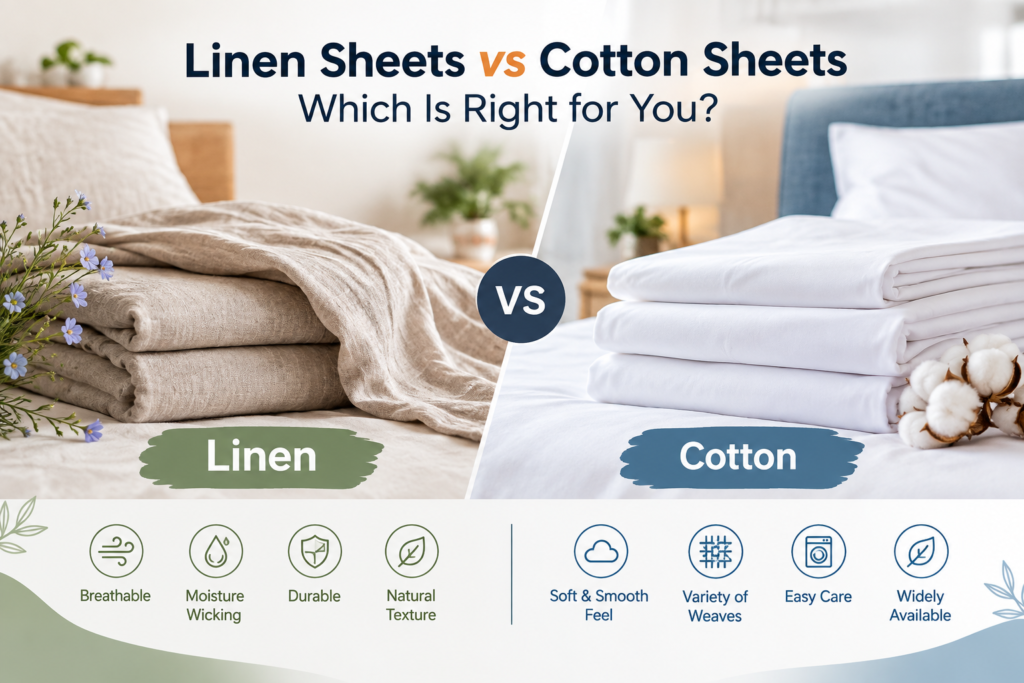
Linen Sheets vs Cotton Sheets: Which Is Right for You? If you are comparing linen sheets vs cotton sheets, the practical answer depends on what you value most. Linen is known for its airy texture, moisture management, durability, and relaxed appearance, while cotton offers a smoother feel, broad choice of weaves, easy care, and a familiar bedding experience. Neither fabric is automatically right for everyone. Your climate, sleeping habits, preferred texture, laundering routine, budget, and intended use all matter. Both linen and cotton are natural plant-based fibers, but they behave differently when turned into bedding. Understanding those differences makes it easier to choose sheets for a home, hotel, resort, guest room, or other hospitality setting. Linen Sheets vs Cotton Sheets at a Glance Feature Linen Sheets Cotton Sheets Source Flax plant Cotton plant Feel Textured and relaxed Generally smoother Breathability Excellent Good to excellent depending on construction Moisture management Very good Very good Durability Strong and durable Varies by cotton quality and construction Appearance Naturally relaxed and textured Usually smoother and more structured Wrinkling More noticeable Generally less noticeable Weave options Commonly plain woven Percale, sateen and other constructions Care Follow manufacturer instructions; gentle washing is common Generally easy to machine wash; follow label instructions These differences are consistent with comparisons from bedding specialists, although exact performance varies according to fiber quality, fabric construction, finishing, and care. What Are Linen Sheets? Linen sheets are made from fibers obtained from the flax plant. Linen has a distinctive natural texture and tends to have a relaxed, slightly rumpled appearance. It is also valued for its breathability and ability to manage moisture. New linen can feel more textured or crisp than cotton. With regular use and appropriate washing, however, linen generally becomes softer and more supple. Its relaxed appearance is part of its appeal, so it does not need to look perfectly pressed to appear polished. For people who prefer an airy sleeping environment, linen can be particularly appealing. Its construction allows substantial airflow, while the fiber can absorb and release moisture effectively. What Are Cotton Sheets? Cotton sheets are made from cotton fibers and are available in a much wider range of fabric constructions. Two familiar examples are percale and sateen. Percale normally has a crisp, matte hand and a simple one-over, one-under weave. Sateen uses a different weave structure that creates a smoother, silkier surface. This means that saying “cotton sheets” does not describe only one sleeping experience. Cotton quality also matters. Long-staple cotton can produce smoother and stronger yarns, while the weave and finishing process influence how a sheet feels and performs. Thread count alone should not be treated as a complete measure of sheet quality. Linen vs Cotton for Cooling and Breathability For warm sleepers, breathability is one of the most important considerations. Linen is widely recognized for its airy construction and strong moisture-management characteristics. Its open, textured structure can encourage airflow around the body. Cotton can also be highly breathable, particularly when used in lightweight constructions such as percale. The important point is that fiber is only part of the equation. Weave, fabric weight, finishing, room temperature, bedding layers, and individual sleep habits can all affect how cool a sheet feels. If you regularly sleep hot, compare lightweight linen with breathable cotton constructions rather than judging every linen sheet against every cotton sheet. For a broader comparison of linen and cotton sheet characteristics, including breathability, durability, feel, and care, readers can also refer to this detailed linen vs. cotton sheets comparison from Sleep Foundation. Which Feels Softer: Linen or Cotton? Cotton commonly feels smoother straight out of the package, which makes it attractive to people who want a familiar soft surface immediately. Linen has a more noticeable natural texture. Some people enjoy that tactile character, while others prefer the smoother feel of cotton. Linen can also soften with washing and use, so the first impression does not necessarily represent how it will feel later. If immediate smoothness is your priority, cotton may feel more familiar. If you like texture and a relaxed, lived-in character, linen may be more appealing. Which Is More Durable? Durability depends on more than simply choosing linen or cotton. Linen fibers are naturally strong and linen bedding is widely regarded as durable. Cotton can also provide excellent long-term performance when it uses quality fiber, appropriate construction, and proper care. For cotton, fiber length, yarn quality, weave structure, finishing, and laundering practices can all influence service life. A well-made cotton percale sheet, for example, can perform very differently from a lower-quality cotton sheet. The practical lesson is simple: evaluate the complete fabric specification rather than relying on the fiber name alone. Linen vs Cotton: Which Is Easier to Care For? Both fabrics can be relatively straightforward to maintain when the manufacturer’s care instructions are followed. For many washable linen and cotton sheets, cool or cold washing and moderate drying temperatures can help reduce unnecessary shrinkage and fabric stress. Harsh detergents, excessive heat, and overly aggressive washing can shorten the useful life of bedding. Linen naturally wrinkles more than cotton. If you prefer a pressed appearance, you may need additional finishing or ironing. If you like a relaxed bedroom style, linen’s natural texture can be left as it is. Always check the actual care label because blends, finishes, dyes, and construction can change the recommended washing procedure. Does Thread Count Matter for Linen and Cotton? Thread count should be interpreted carefully. For cotton, thread count describes the number of threads woven into a specific area of fabric, but a larger number does not automatically mean better bedding. Fiber quality, yarn construction, weave, finishing, and manufacturing quality also affect performance. Linen is generally not evaluated using thread count in the same way because its yarns and fabric characteristics differ from conventional cotton sheeting. Looking at fiber quality, fabric weight, construction, and finishing can provide more useful information. Linen vs Cotton for Hotels and Hospitality Hotels have different requirements from residential buyers. A hospitality bedding program has

What Is Atlas & Indus Linen
Atlas Indus Linen

What Is Atlas & Indus Linen? Hotel Linen & Hospitality Guide

Hospitality Linen & Textiles What Is Atlas & Indus Linen? Atlas & Indus Linen Co. is a hospitality textile supplier focused on professional hotel bedding, bath linen, and bespoke textile solutions for hotels, resorts, riads, spas, and other hospitality properties. Hotel Linen Hospitality Textiles Morocco Bespoke Solutions Hospitality linen is part of the complete guest-room experience, from comfort and presentation to housekeeping and laundering requirements. Atlas & Indus Linen Co. focuses on institutional-grade hospitality textiles and premium cotton products for professional hospitality environments. Its current offering is positioned around hotels, resorts, riads, spas, and other properties that need bedding and bath textiles designed around commercial requirements. The company identifies Morocco as an important hospitality market while also developing international supply capabilities. Rather than treating hotel linen as ordinary household bedding, the Atlas & Indus approach centers on specifications, consistency, customization, and the practical demands of professional use. 01 Hospitality Focus Products and textile solutions are presented specifically for professional hospitality environments. 02 Specification Driven Hotel buyers can evaluate dimensions, fabric, construction, care requirements, and customization. 03 Bespoke Options Custom dimensions and selected finishing or branding requirements can be discussed for hospitality projects. What Is Atlas & Indus Linen? Atlas & Indus Linen Co. is a hospitality textile manufacturer and supplier focused on institutional-grade hotel linen and related textile products. Its product focus includes professional bedding and bath linen, with bespoke options intended for properties that have requirements beyond standard retail dimensions or finishes. This makes the company relevant to hospitality buyers who need to consider more than the appearance of a sheet or towel. Hotel textile procurement can involve mattress dimensions, laundering processes, guest comfort, housekeeping procedures, replacement requirements, storage, and consistency between orders. What Does Atlas & Indus Linen Supply? The Atlas & Indus range is organized around the main textile requirements of professional hospitality properties. 01 Hotel Bedding Hotel bedding can include fitted sheets, flat sheets, duvet covers, pillowcases, blankets, and other bedroom textiles. The correct combination depends on the property’s room configuration and bedding system. 02 Bath Linen Professional bath programs may include bath towels, hand towels, bath mats, bathrobes, and other bathroom textiles selected around guest experience and operational requirements. 03 Bespoke Hospitality Linen Hospitality properties may require custom dimensions, borders, embroidery, monogramming, closures, or other project-specific specifications. 04 Professional Textile Supply Commercial buyers need repeatable specifications and consistent communication so future orders can remain aligned with the original property requirements. Why Is Hospitality Linen Different From Residential Linen? A hotel room may be prepared and occupied repeatedly, and its textiles can pass through frequent laundering, handling, folding, storage, and housekeeping procedures. That changes how linen should be evaluated. Residential Linen Hospitality Linen Usually purchased for an individual household Purchased for a professional operating environment Lower frequency of use in many homes Can experience frequent guest use and laundering Personal preferences often guide selection Property-wide standards and specifications matter Standard sizes may be sufficient Specific mattress and room dimensions may need to be considered Replacement may be occasional Inventory and replacement planning are operational concerns This does not mean every hotel needs the same textile. A boutique riad, luxury resort, business hotel, and guesthouse can have very different requirements. Why Does Cotton Matter in Hotel Textiles? Cotton is widely used in sheets and towels because its fiber properties can support comfort, breathability, and absorbency. However, the word “cotton” alone does not tell a buyer everything about a finished textile. Fiber characteristics, yarn quality, fabric construction, finishing, weight, and product design can all affect the finished result. CottonWorks’ technical guidance for home textiles similarly recommends looking at fiber content, yarn quality, construction, and finishing when evaluating cotton sheets and towels. Read the CottonWorks cotton home-textile guide for additional technical background. How Should Hotels Choose Their Bedding? Hotel bedding should be selected according to the property’s actual operating environment rather than a single marketing specification. Confirm mattress and bed dimensions before ordering fitted sheets. Review fiber composition and fabric construction. Consider the property’s laundering process. Evaluate comfort, texture, appearance, and room standards. Review care instructions supplied by the manufacturer. Request samples when a larger purchasing decision is involved. Confirm whether custom dimensions or finishing are required. Plan inventory and replacement requirements. Atlas & Indus Linen has also published a detailed hotel bedding selection guide covering fabric, thread count, fitted-sheet sizing, laundering, guest comfort, and common purchasing mistakes. Can Atlas & Indus Linen Provide Custom Hotel Linen? Yes. Atlas & Indus Linen presents bespoke hospitality textile options for properties with requirements that may differ from standard retail products. Custom Dimensions Useful for properties with non-standard mattresses, room layouts, or specific textile measurements. Embroidery & Monogramming Branding details can be considered where a property wants its textiles to reflect its visual identity. Special Finishing Borders, closures, hems, and other finishing requirements can be discussed according to the project. Project Specifications Hospitality buyers can communicate product dimensions, quantities, intended use, and other specifications before production. What Problems Can the Right Linen Supplier Help Solve? Hotel linen purchasing becomes more useful when it starts with the property’s real operational problems. Problem: Fitted sheets do not fit properly Incorrect mattress measurements or pocket depth can create problems during room preparation. Practical approach Confirm mattress dimensions and required pocket depth before production. Problem: Replacement batches do not match Differences between orders can complicate housekeeping and room presentation. Practical approach Keep clear product specifications and confirm repeat-order requirements. Problem: Standard products do not suit the property A boutique hotel or riad may have unusual dimensions or branding requirements. Practical approach Discuss custom sizing, borders, embroidery, closures, or other project-specific requirements. Problem: Purchasing focuses only on price The lowest purchase price does not necessarily represent the best operational fit. Practical approach Compare the complete specification, expected use, laundering, replacement, and consistency requirements. What Should a Hotel Ask a Linen Supplier? Before placing a substantial hospitality textile order, procurement teams can prepare a simple specification checklist. What is the fiber composition? What are the exact finished

Scroll to Top