
What Kind of Mattresses Do Hotels Use?
If you’ve ever slept exceptionally well in a hotel, you may have wondered, what kind of mattresses do hotels use? There is no single mattress that every hotel chooses. Mattress construction varies according to the hotel’s brand, property category, room type, location, budget, and guest requirements.
However, many hotels use mattresses built around durable support systems such as innerspring or pocket-coil cores, while hybrid designs combine springs with foam or other comfort layers. Luxury properties may also use custom-designed mattresses, pillow-top constructions, or mattress-and-topper combinations to create a distinctive sleep experience.
For hotel operators, choosing a mattress is about more than making a bed feel comfortable. A hospitality mattress needs to provide a consistent guest experience while also being suitable for frequent use, routine maintenance, and the operational requirements of the property.
What Kind of Mattresses Do Hotels Use Most Often?
Hotels use several different mattress constructions, but innerspring, pocket-coil, hybrid, and foam mattresses are among the main types found in hospitality settings.
The exact specification can differ significantly between properties. For example, Sleep Foundation’s research into major hotel brands shows that some properties use hybrid mattresses with pocketed coils and foam layers, while other hotel brands or locations may use innerspring or all-foam constructions.
This means there is no universal definition of a “hotel mattress.” Instead, hospitality mattresses are generally selected around a combination of support, comfort, durability, maintenance, and guest expectations.
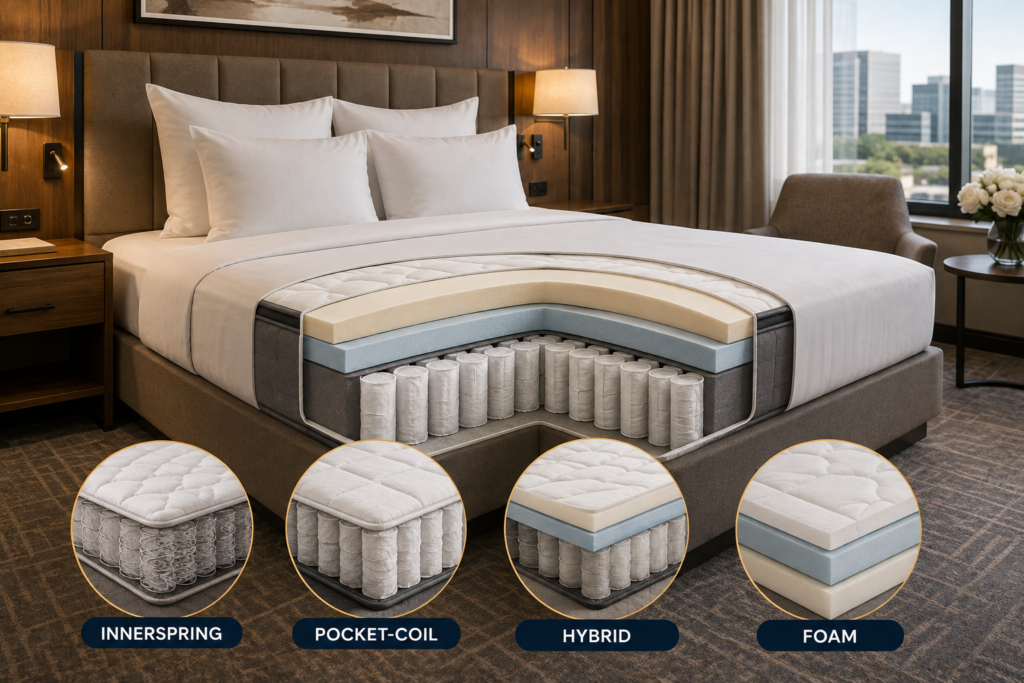
1. Innerspring Mattresses
Innerspring mattresses use a system of metal coils as their primary support structure. They have been widely used in hospitality because spring systems can provide a supportive sleeping surface and a familiar mattress feel.
Different spring designs can produce different levels of responsiveness, support, and motion transfer. Pocketed coils, for example, allow individual springs to respond more independently than some traditional interconnected coil systems.
For hotels accommodating couples and other shared-room guests, motion control can be an important consideration when selecting a mattress.
2. Pocket-Coil Mattresses
Pocket-coil mattresses contain individually wrapped springs that can respond more independently to pressure.
This construction is particularly useful when hotels want to balance support with reduced movement across the sleeping surface. Pocketed coils can also contribute to airflow through the mattress structure.
The Four Seasons Signature Bed, for example, is described by Sleep Foundation as a hybrid design using a pocketed-coil support base together with foam comfort layers.
3. Hybrid Hotel Mattresses
Hybrid mattresses combine a spring support system with one or more comfort layers, commonly foam.
This construction has become an important option in hospitality because it can combine the responsiveness and airflow associated with springs with the cushioning characteristics of foam.
A hybrid hotel mattress may include:
- Pocketed or other spring systems
- Polyfoam comfort layers
- Memory foam layers
- Quilted upholstery
- A reinforced perimeter
- A dedicated pillow-top or comfort layer
The exact materials and construction depend on the manufacturer and hotel specification. For example, Sleep Foundation describes both the Four Seasons and Ritz-Carlton beds as hybrid constructions, although their designs and materials differ.
4. Foam Mattresses
Some hotels use all-foam mattresses rather than spring-based designs.
Foam mattresses can be constructed from different materials and densities, including polyurethane foam and memory foam. Their feel depends heavily on the composition and thickness of the individual layers.
Importantly, not every hotel uses the same construction. Sleep Foundation notes that Marriott properties, for example, can have different mattress constructions depending on the market, including all-foam and innerspring models.
Do Hotels Use Medium-Firm Mattresses?
Many hotels choose a medium or medium-firm feel because hotel rooms are used by a wide range of sleepers.
A mattress that is extremely soft or extremely firm may not suit as many guests. A balanced support level with a cushioning comfort layer can provide a more broadly appealing sleeping surface.
Sleep Foundation reports that many hotel mattresses combine a medium-firm support core with softer upper comfort layers. This helps explain why some hotel beds can feel plush when you lie down even though the underlying mattress is not particularly soft.
However, firmness is not standardized across the hospitality industry. Some properties offer different firmness options, while particular hotel brands may develop their own specifications.
Why Do Hotel Mattresses Feel So Comfortable?
The mattress is only one part of the hotel sleep experience.
A professionally prepared hotel bed may combine the mattress with a foundation or bed base, mattress protector or topper, sheets, duvet, pillows, and carefully selected room conditions.
This complete setup can influence how the bed feels to a guest.
A comfortable hotel bed may therefore involve several layers working together rather than relying on an unusually soft mattress alone.
Mattress Support
A supportive core helps establish the overall feel of the bed. Depending on the mattress, this may come from pocket coils, other spring systems, or foam.
Comfort Layers
Foam, quilted upholstery, pillow-top sections, or other cushioning materials can provide additional softness above the support core.
Mattress Toppers
Some properties use a separate topper or additional cushioning layer to alter the feel of the bed without changing the underlying mattress.
Quality Bedding
Sheets, duvet covers, pillows, and other hotel linen also contribute to the overall sleeping experience. The interaction between these products and the mattress can affect how a guest perceives the bed.
For hospitality operators, this is why mattress selection should be considered as part of the wider hotel bedding system, rather than as an isolated purchase.
What Makes a Good Hotel Mattress?
A suitable hotel mattress needs to meet the requirements of both guests and the property.
Hotels typically need to consider factors such as:
Guest comfort: The mattress should provide a comfortable sleeping surface for a broad range of guests.
Support: The support system should match the intended use and mattress design.
Durability: Hospitality mattresses experience frequent use and therefore need to be selected with the property’s operating conditions in mind.
Motion management: For double-occupancy rooms, limiting unwanted movement between sleepers may be an important consideration.
Temperature management: Mattress construction and room conditions can influence how warm or cool the sleeping surface feels.
Maintenance: Hotels should consider cleaning procedures, mattress protection, rotation requirements, and manufacturer care instructions.
Room compatibility: Mattress dimensions and height should be compatible with the bed frame, foundation, fitted sheets, protectors, and other bedding components.
MattressOnline similarly highlights durability, maintenance, hygiene, and commercial requirements as important considerations when selecting mattresses for hotels and other accommodation businesses.
Do Luxury Hotels Use Different Mattresses?
Luxury hotels often use custom or hospitality-specific mattresses designed around their particular guest experience.
For example, Sleep Foundation’s research identifies custom mattress arrangements associated with Four Seasons and Ritz-Carlton. These examples demonstrate that luxury hotel beds can be developed around a particular brand rather than relying on one standard mattress sold across the entire industry.
A luxury hotel may therefore specify particular combinations of:
- Spring construction
- Foam layers
- Mattress height
- Firmness
- Edge support
- Quilting
- Surface comfort
- Mattress toppers
- Bedding and linen
The goal is not necessarily to find the softest mattress. Instead, the property can develop a sleep system that delivers a consistent experience aligned with its rooms and brand.
What Mattress Types Are Best for Hotels in Warm Climates?
Hotels in warmer climates may pay particular attention to ventilation, material selection, room temperature, and bedding layers.
Spring-based mattresses can provide internal airflow through their construction, while some foam mattresses incorporate materials or designs intended to manage heat.
However, no single mattress type is automatically the best choice for every warm-climate hotel.
The room’s air conditioning, mattress protector, sheets, duvet weight, humidity, and other bedding choices all influence the overall sleep environment.
For properties in warm regions, including hotels and riads in Morocco, mattress selection should therefore be considered together with the rest of the room’s bedding specification.
How Do Hotels Choose a Mattress?
Hotel operators should begin with the requirements of the property rather than simply choosing a mattress because it is marketed as a “luxury hotel mattress.”
Important questions include:
What type of rooms will use the mattress?
A standard guest room, suite, resort villa, extended-stay room, and healthcare accommodation may have different requirements.
How frequently will the mattress be used?
A high-occupancy property can place different demands on mattresses compared with a smaller accommodation business.
What firmness is appropriate?
Hotels should consider whether a medium, medium-firm, firm, or softer specification is appropriate for their target guests and brand positioning.
What bedding will be used with it?
The mattress must work with the property’s fitted sheets, mattress protectors, toppers, duvet system, and other bedding.
What are the maintenance requirements?
Operators should review the manufacturer’s care, rotation, protection, and replacement recommendations before making a commercial purchase.
What are the dimensions?
Mattress dimensions and depth should be confirmed before ordering fitted sheets and other bedding products. A well-fitted sheet is essential for maintaining a neat and comfortable guest bed.
Hotel Mattresses vs. Home Mattresses
A hotel mattress is not necessarily better simply because it is made for a hotel.
The important difference is the intended operating environment.
A domestic mattress is generally selected for one household and a relatively consistent group of sleepers. A hotel mattress has to accommodate many different guests over its service life.
Hotels therefore have additional considerations, including:
- Frequent guest turnover
- Consistent room presentation
- Commercial purchasing
- Maintenance procedures
- Mattress protection
- Replacement planning
- Compatibility with standardized bedding
This is why hospitality buyers should evaluate the complete specification rather than focusing only on the mattress label.
How Hotel Bedding Works With the Mattress
A mattress is the foundation of the guest bed, but the final bedding system can have a major effect on presentation and comfort.
A typical hotel bed may include a mattress, mattress protector, fitted sheet, flat sheet where applicable, duvet or comforter, duvet cover, pillows, and decorative or functional bedding layers.
The fitted sheet is particularly important because it needs to match the mattress dimensions and depth.
Atlas & Indus Linen provides hospitality bedding and linen solutions for hotels, resorts, and other professional accommodation environments. You can explore the Bedding collection to see complementary hotel bedding products.
For properties with more specific textile requirements, the Bespoke Linen collection can also be considered.
What Should Hotels Consider When Buying Mattresses in Bulk?
Commercial mattress purchasing is different from buying a single mattress for a home.
Hotels should evaluate the complete specification before placing a bulk order. This may include mattress dimensions, construction, firmness, height, materials, warranty terms, maintenance requirements, expected service life, delivery arrangements, and compatibility with existing bed frames.
It is also useful to request product documentation and confirm specifications directly with the manufacturer or supplier.
For a hotel project, consistency can be particularly important. Using standardized mattress dimensions and compatible bedding across rooms can make room preparation and linen management more straightforward.
Frequently Asked Questions
What kind of mattresses do hotels use?
Hotels use several mattress types, including innerspring, pocket-coil, hybrid, and foam constructions. The exact choice varies by hotel brand, property, market, room type, and specification.
Do hotels use firm or soft mattresses?
Many hotels use a medium to medium-firm support level with softer comfort layers on top. However, firmness varies between properties, and some hotels offer different firmness options.
Are hotel mattresses usually hybrid?
Hybrid mattresses are used by many hotels, but they are not universal. Some properties use innerspring or all-foam mattresses, while others use custom constructions.
Why do hotel beds feel softer than expected?
The perceived softness of a hotel bed can come from the combination of the mattress’s support core, comfort layers, topper, mattress protector, and bedding. A mattress can have a medium-firm support structure while still providing a cushioned surface.
Do all five-star hotels use the same type of mattress?
No. Five-star hotels do not follow one universal mattress specification. Luxury properties may use custom mattresses, hybrids, innerspring constructions, foam designs, or other combinations depending on their requirements.
What should hotels look for when choosing a mattress?
Hotels should consider guest comfort, support, durability, mattress dimensions, maintenance requirements, room use, compatibility with the bed base and bedding, and the manufacturer’s specifications.
Final Thoughts
So, what kind of mattresses do hotels use?
The answer is broader than one mattress type. Hotels commonly use innerspring, pocket-coil, hybrid, and foam mattresses, with many properties favoring constructions that balance support, cushioning, durability, and broad guest appeal.
Luxury hotels may go further by commissioning custom mattresses or combining a supportive mattress with additional comfort layers or toppers.
For hotel operators, the best mattress is ultimately the one that fits the property’s operational requirements, guest expectations, room design, maintenance practices, and overall bedding system.
The mattress is only the beginning. A well-designed hotel sleep environment also depends on properly specified sheets, duvet covers, pillows, mattress protection, and other hospitality linen. Selecting these components together can help properties create a consistent and professionally presented guest-room experience.