Office No. 203, 2nd Floor, Plaza No. 100, Sector Business District North, Phase 8, Bahria Town, Rawalpindi.

Uncategorized

where do hotels get their towels
Uncategorized

Where Do Hotels Get Their Towels? Complete Sourcing Guide

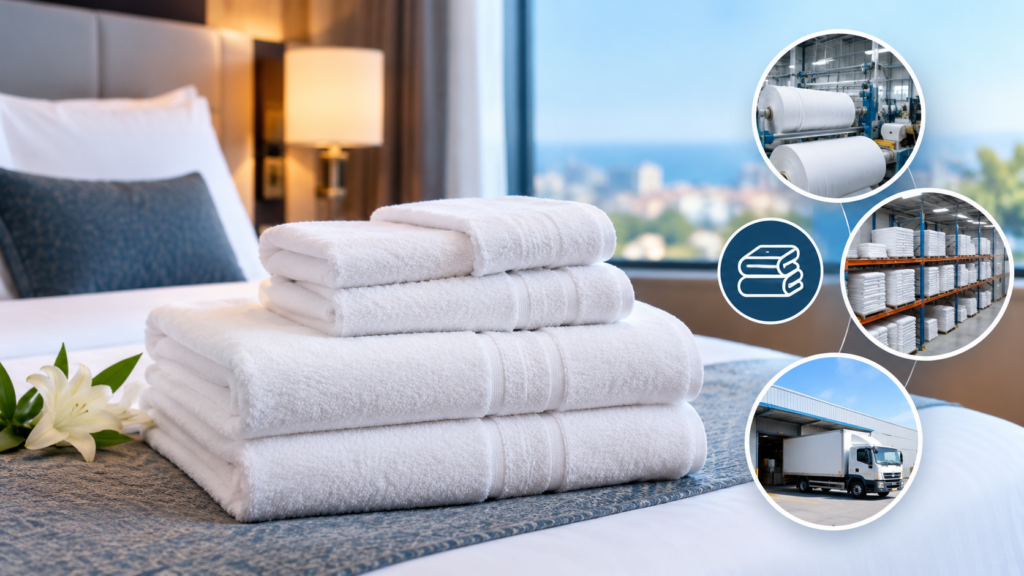
Where Do Hotels Get Their Towels? A Complete Hotel Towel Sourcing Guide If you have ever wondered where do hotels get their towels, the answer is usually from specialized hospitality linen suppliers, textile manufacturers, wholesalers, or commercial distributors. Hotels do not normally purchase towels in the same way consumers buy towels for their homes. Hospitality properties need towels in larger quantities and must consider factors such as durability, absorbency, fabric construction, size, laundering requirements, replacement schedules, consistency, and overall cost. Some hotels purchase directly from towel manufacturers, while others work with distributors or hospitality-linen companies that supply multiple types of hotel textiles. The right sourcing method depends on the size of the property, purchasing requirements, location, budget, laundry operation, and desired guest experience. Where Do Hotels Get Their Towels? Hotels commonly obtain towels through several sourcing channels: There is no single supplier that provides towels to every hotel. A small independent hotel might purchase through a hospitality distributor, while a larger hotel group may have centralized purchasing arrangements and approved suppliers. Hotels can also work directly with manufacturers when they need consistent specifications, larger quantities, private-label products, custom designs, or recurring supply. 1. Hotels Can Buy Towels Directly From Manufacturers One of the most direct sourcing options is purchasing from a towel manufacturer. A manufacturer can produce towels according to specifications such as: This approach can be particularly useful for hotels purchasing towels in significant quantities or establishing a long-term linen program. Direct manufacturing relationships can also make it easier for a hotel to maintain consistent specifications when it needs to reorder towels. However, buying directly from a manufacturer may involve minimum order quantities, production lead times, international shipping, import requirements, and more detailed purchasing arrangements. 2. Hotels Buy From Hospitality Linen Suppliers Another common route is a dedicated hospitality linen supplier. These companies specialize in supplying products designed for hotels and other commercial properties. Depending on the supplier, the product range can include: A hospitality supplier can be useful for hotels that want to source several types of linen from one company instead of managing separate suppliers for every product. This can simplify purchasing, inventory management, and reordering. 3. Hotels Can Purchase Towels From Wholesale Distributors Wholesale distributors are another option. A distributor purchases products from manufacturers or other supply sources and sells them to businesses. Hotels can use distributors when they need relatively straightforward ordering, regional delivery, or access to multiple hospitality products. This model can be particularly convenient for smaller properties that do not want to manage direct international manufacturing relationships. The trade-off is that the hotel may have less direct control over manufacturing specifications than it would have when working directly with a factory. 4. Hotel-Supply Companies Provide Complete Procurement Options Some commercial hotel-supply companies provide much more than towels. A hotel may be able to source towels alongside bedding, bathroom accessories, guest-room supplies, housekeeping products, and other hospitality items. This can make procurement easier because the property can consolidate purchases. However, hotels should still check the actual product specifications rather than assuming that a product is suitable simply because it is marketed as “hotel quality.” The term hotel quality by itself does not establish a universal technical specification. 5. Large Hotel Groups May Use Approved Suppliers Large hotel groups can have more structured procurement systems. Instead of allowing every property to purchase whatever towel it prefers, a group may establish specifications and approved suppliers to maintain consistency across properties. This can help ensure that towels have consistent: The exact purchasing structure differs between hotel companies and properties. What Do Hotels Look for When Buying Towels? Knowing where hotels get their towels is only part of the question. Hotels also need to determine what type of towel is appropriate for their operation. Important specifications can include the following. Cotton and Fiber Composition Cotton is widely used for hotel towels because it can provide absorbency and a comfortable hand feel. Different cotton constructions and yarn types can produce different characteristics. For example, combed or ring-spun cotton may be specified for particular performance and feel requirements. Some suppliers also offer blends or alternative fibers. The best choice depends on the hotel’s intended use, budget, laundering system, and performance requirements. GSM GSM means grams per square metre. It describes the weight of the fabric per unit of area and is an important specification when comparing towels. In general, a heavier towel can feel thicker and more substantial, but higher GSM is not automatically better for every hotel. A heavier towel can also require more drying time and potentially increase laundering requirements. This is why hotel buyers should balance guest comfort with operational performance rather than selecting the highest GSM available. Current hospitality buying guides commonly emphasize this trade-off. Towel Construction The construction of the towel affects its feel, absorbency, durability, and appearance. Hotels can evaluate details such as: These details can matter considerably when towels are subjected to frequent commercial laundering. Size Hotels normally need several towel sizes rather than one universal towel. A typical bathroom linen program can include: The exact dimensions can vary between properties and suppliers, so hotels should establish standardized specifications before placing large orders. Why Do Hotels Usually Choose White Towels? White is extremely common in hotel bathrooms. There are practical reasons for this. A standardized white towel gives a property a consistent appearance and makes it easier to maintain a uniform linen program. White towels can also be processed using established commercial laundry procedures, although the exact cleaning and bleaching practices depend on the property’s laundry operation, textile specifications, and applicable requirements. Some hotels, resorts, spas, and boutique properties use other colors or decorative borders as part of their design identity. Therefore, white is common, but it is not a universal requirement for hotel towels. How Many Towels Does a Hotel Need? Hotels need more towels than the number of rooms might initially suggest. A towel can be: Hotels therefore maintain additional inventory to prevent shortages during laundering and replacement. The exact
what are hotel sheets made of
Uncategorized

What Are Hotel Sheets Made Of? Materials & Types Guide

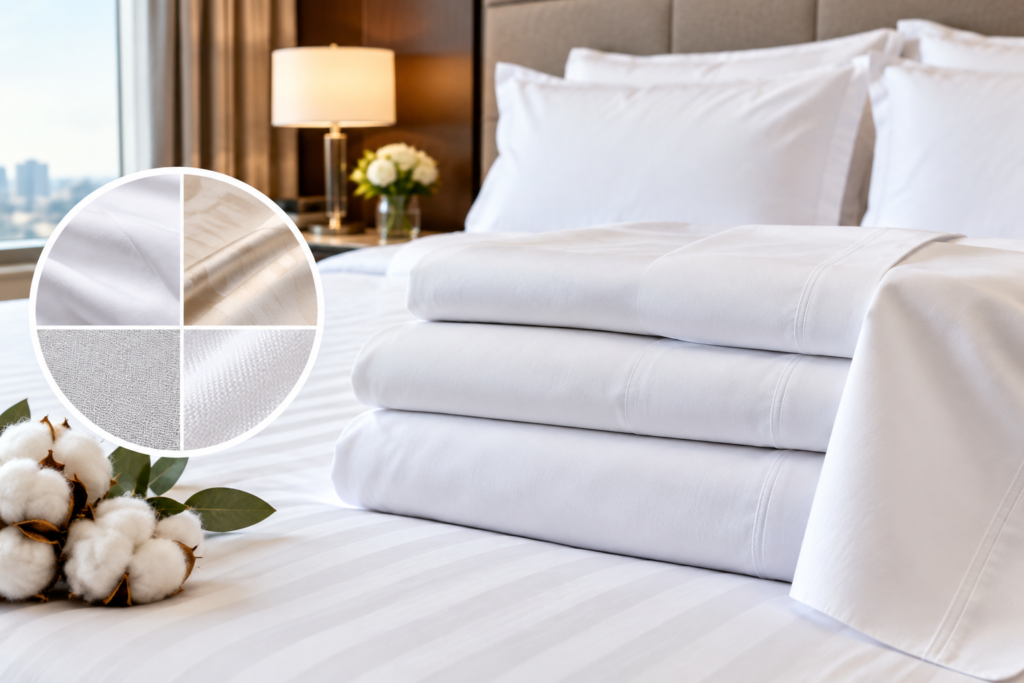
What Are Hotel Sheets Made Of? A Complete Guide to Hotel Bedding Materials If you have ever wondered what are hotel sheets made of, the answer is usually cotton, a cotton-polyester blend, or another durable bedding fabric selected for the demands of hospitality use. Hotels need sheets that are comfortable for guests but also strong enough to withstand frequent washing, drying, pressing, and replacement cycles. There is no single material used by every hotel. A budget property may prioritize durability and easy-care performance, while an upscale hotel may choose premium cotton with a particular weave and finish. Factors such as fiber quality, weave, thread count, laundering requirements, climate, and cost all influence the final choice. For hotels, bedding is more than a decorative feature. Sheets are part of the guest experience and also an important operational investment. What Are Hotel Sheets Made Of? Most hotel sheets are made from 100% cotton or cotton blends, particularly cotton-polyester fabrics. Cotton is popular because it can provide softness, breathability, moisture absorption, and a comfortable feel against the skin. Polyester can be added to improve durability, wrinkle resistance, drying performance, and overall practicality in commercial laundry operations. The exact composition varies considerably between properties. Common hotel-sheet materials include: This means it is inaccurate to say that every hotel uses Egyptian cotton or that every luxury hotel uses exactly the same type of sheet. 100% Cotton Hotel Sheets Cotton remains one of the most common choices for hotel bedding. High-quality cotton can produce sheets that are breathable, comfortable, and durable. Longer cotton fibers can be spun into finer and stronger yarns, which can contribute to a smoother and more durable finished fabric. For hotels that want a classic natural-fiber bedding experience, 100% cotton can be an excellent option. The disadvantage is that cotton can wrinkle more than synthetic blends and may require more attention during commercial laundering and finishing. Cotton-Polyester Hotel Sheets Cotton-polyester blends combine natural and synthetic fibers. The cotton contributes to comfort and moisture management, while polyester can improve wrinkle resistance and durability. These characteristics can be valuable for hotels because sheets may be washed and processed frequently. Cotton-polyester blends are therefore especially practical where laundry efficiency, consistency, durability, and operating costs are important considerations. Good Housekeeping also identifies cotton and cotton-polyester blends as common materials in hotel sheets. The exact blend ratio is not universal. Hotels and suppliers can specify different constructions according to the intended use. Why Do Hotels Use Cotton So Often? Cotton has several characteristics that make it suitable for hospitality bedding. First, it provides a familiar, comfortable surface for guests. Second, it is available in many qualities and constructions, allowing hotels to select bedding according to their positioning and budget. Cotton can also be woven into different structures, including percale and sateen. This allows hotels to create different tactile experiences without necessarily changing the underlying fiber. Another advantage is versatility. Cotton bedding can be produced in different weights, thread counts, colors, finishes, and constructions for hotels, resorts, serviced apartments, and other hospitality environments. What Is Hotel Percale? Percale describes a weave, not a type of fiber. Cotton percale generally uses a simple one-over, one-under weave structure. It produces a smooth, crisp surface and is commonly associated with the cool, freshly made feeling of a hotel bed. Percale can be made from different fibers, although cotton is particularly common. Hotels may choose percale because it offers a combination of a crisp hand feel, breathability, and practical durability. For guests who prefer a fresh, cool, structured bedding feel, percale is often a strong choice. What Is Hotel Sateen? Sateen is another type of weave. Unlike percale, sateen has a smoother surface with more visible luster and a softer drape. Cotton sateen can create a more luxurious and silky-feeling sleeping surface. Sateen is therefore often considered when a hotel wants bedding with a smoother, softer, more polished character. Neither percale nor sateen is automatically better. The best choice depends on the hotel’s desired guest experience, climate, design concept, laundry requirements, and budget. Does Thread Count Matter for Hotel Sheets? Thread count refers to the number of threads woven into one square inch of fabric. It can be useful when comparing sheets made using similar construction methods, but it should not be treated as the only measurement of quality. Fiber quality, yarn construction, weave, finishing, fabric weight, stitching, and manufacturing quality can all affect how hotel sheets perform and feel. The Sleep Foundation notes that hotel sheets can vary considerably in thread count and that cotton hotel sheets are commonly available across a broad range. It also emphasizes considering fiber quality rather than relying only on an exceptionally high thread-count number. Therefore, a higher advertised thread count does not automatically mean a sheet is better for hotel use. Do Five-Star Hotels Always Use Egyptian Cotton? No. This is one of the most common misconceptions about hotel bedding. Some luxury hotel bedding collections use premium long-staple cotton, including products marketed as Egyptian cotton, Pima, or Supima. However, there is no universal rule requiring five-star hotels to use Egyptian cotton. Hotels select bedding according to their individual specifications and purchasing requirements. In addition, the term “Egyptian cotton” should be evaluated carefully. The Sleep Foundation points out that not every product marketed as Egyptian cotton necessarily provides the same fiber quality, so buyers should examine the product labeling and specifications rather than assuming that the name alone guarantees superior quality. What Makes Hotel Sheets Feel So Good? The answer is usually a combination of factors rather than one secret material. Fiber Quality The quality and length of the fibers used to make the yarn can influence softness, strength, and smoothness. Longer cotton fibers can produce finer, more consistent yarns and can contribute to a premium bedding experience. Weave The weave changes the character of the fabric. Percale generally feels crisp and breathable, while sateen tends to feel smoother and more fluid. Finishing Professional finishing and laundering can significantly influence how freshly made hotel bedding

do hotels use percale or sateen
Uncategorized

Do Hotels Use Percale or Sateen? 7 Important Differences

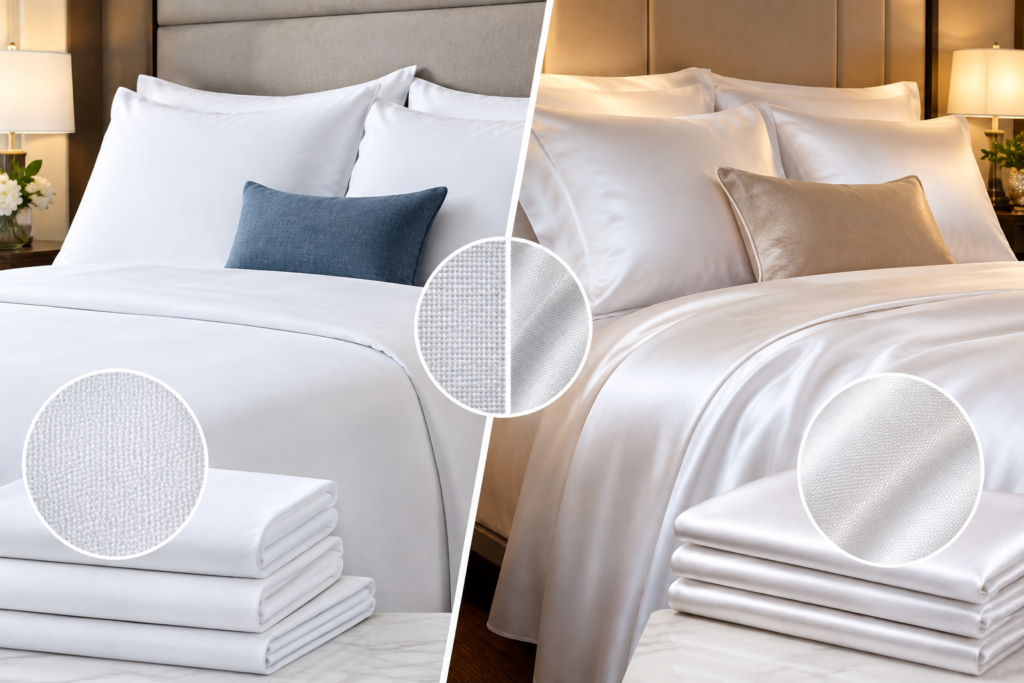
Do Hotels Use Percale or Sateen? The Complete Hotel Sheet Guide Focus Keyword: Do hotels use percale or sateen If you have ever slept in a luxury hotel and wondered why the sheets felt crisp, cool, or exceptionally smooth, you may ask: do hotels use percale or sateen? The short answer is hotels use both percale and sateen, but the choice depends on the hotel’s brand, climate, guest experience goals, laundry requirements, and bedding specifications. Percale is widely associated with the classic crisp and cool hotel-bed feeling. Sateen, meanwhile, is chosen by some luxury hotels and premium bedding programs for its smooth, soft, and subtly lustrous finish. There is no single weave used by every hotel. This guide explains the real differences between hotel percale and sateen sheets and helps hotel owners, hospitality buyers, and guests understand which option may be the better choice. Do Hotels Use Percale or Sateen? Hotels use both percale and sateen sheets. However, percale is commonly selected when a hotel wants a crisp, breathable, structured feel and strong performance under frequent laundering. Sateen may be selected when the goal is a softer, smoother, and more luxurious-feeling sleeping experience. Luxury linen manufacturer Frette, which serves the hospitality market, describes percale as lightweight, crisp, and matte, while sateen is smoother and more lustrous. Its bedding collections also demonstrate that both weave types have a place in luxury hospitality. Therefore, the most accurate answer is: Many hotels prefer percale for a classic crisp hotel feel, but luxury and upscale properties may also use sateen when they want a softer and silkier experience. What Is Percale? Percale is a plain weave, generally created with a simple one-over, one-under yarn construction. This structure gives percale sheets several recognizable characteristics: High-quality percale is often associated with the classic hotel bed experience. Frette specifically describes percale as a lightweight cotton fabric with a crisp feel and matte appearance, particularly suitable for warmer conditions. Why Percale Is Popular in Hotels Hotels need bedding that balances comfort with operational requirements. Percale can be attractive for hospitality environments because of its crisp appearance and breathable feel. Hotels may choose percale when they want to provide guests with: Commercial hospitality suppliers, including Standard Textile, offer percale products alongside other hospitality sheeting options, demonstrating that percale remains one of the weave structures available to professional hotel buyers. What Is Sateen? Sateen is a weave structure that creates a smoother surface than traditional percale. Unlike percale’s balanced plain weave, sateen uses longer yarn floats across the fabric surface. This creates its recognizable characteristics: Frette describes cotton sateen as soft, lustrous, and silky to the touch. Why Some Hotels Choose Sateen Some hotels want bedding that immediately feels exceptionally soft and smooth when guests enter the bed. Sateen may be particularly attractive for: Importantly, sateen is not automatically better than percale. It simply provides a different experience. Percale vs. Sateen: The Main Differences Feature Percale Sateen Feel Crisp and fresh Smooth and silky Appearance Matte Subtle sheen Weave Plain weave Sateen weave Temperature Feel Generally cooler Often feels warmer Weight Usually lighter Often has more drape Wrinkles May wrinkle more visibly Wrinkles may be less noticeable Best Known For Classic hotel crispness Smooth luxury feel The differences are primarily related to the weave structure rather than simply the fiber itself. Both percale and sateen can be made from cotton and other fiber combinations. Why Do Many People Associate Hotels With Percale Sheets? The classic image of hotel bedding is a white bed with sheets that feel: These characteristics are closely associated with percale. Frette explicitly describes percale as offering a crisp, lightweight, and breathable experience and connects the weave with a classic luxury hotel feel. However, it would not be accurate to claim that every hotel uses percale. Hotels have different bedding programs, suppliers, locations, and guest expectations. A luxury resort in a warm climate may make a different choice from a boutique hotel in a colder region. Do Luxury Hotels Use Percale or Sateen? Luxury hotels can use either percale or sateen. The definition of luxury is not based on one specific weave. Instead, luxury bedding quality depends on multiple factors, including: Some luxury bedding programs emphasize crisp percale, while others use sateen to create a softer and more lustrous experience. For example, the official Westin Store offers hotel-inspired sateen bedding made from Egyptian cotton. At the same time, the Westin bedding store also offers percale products, demonstrating that major hospitality brands can use and market different fabric constructions. This is why the answer to do hotels use percale or sateen is not simply one or the other. Hotels may use either weave depending on their bedding standards and guest experience goals. Is Percale Better for Hotels? Percale can be an excellent choice for hotels, particularly when the property prioritizes a crisp, cool, and traditional hotel-style experience. Percale May Be a Good Choice for: Because hotel linen is washed frequently, hospitality buyers should evaluate the complete fabric specification rather than choosing sheets based on weave alone. Fiber quality, yarn construction, finishing, and the property’s laundering process can all influence how sheets perform over time. Is Sateen Better for Luxury Hotels? Sateen can be an excellent option for luxury hotels that want to create a particularly soft and smooth sleeping experience. Sateen May Be a Good Choice for: A high-quality sateen sheet can feel exceptionally luxurious. However, hotels should evaluate how the fabric performs within their specific commercial laundry process. The best option depends on the complete bedding specification—not simply whether the sheet is labeled percale or sateen. Which Feels More Like a Hotel Bed: Percale or Sateen? For many people, percale feels more like the traditional hotel bed. Percale’s crisp and cool texture is strongly associated with freshly made hotel bedding. Frette describes percale as a choice for people seeking a crisp, structured feel similar to a luxury hotel experience. However, hotel beds do not all feel the same. Some guests may remember a luxury hotel bed

what thread count are hotel sheets
Uncategorized

What Thread Count Are Hotel Sheets? Best TC Guide

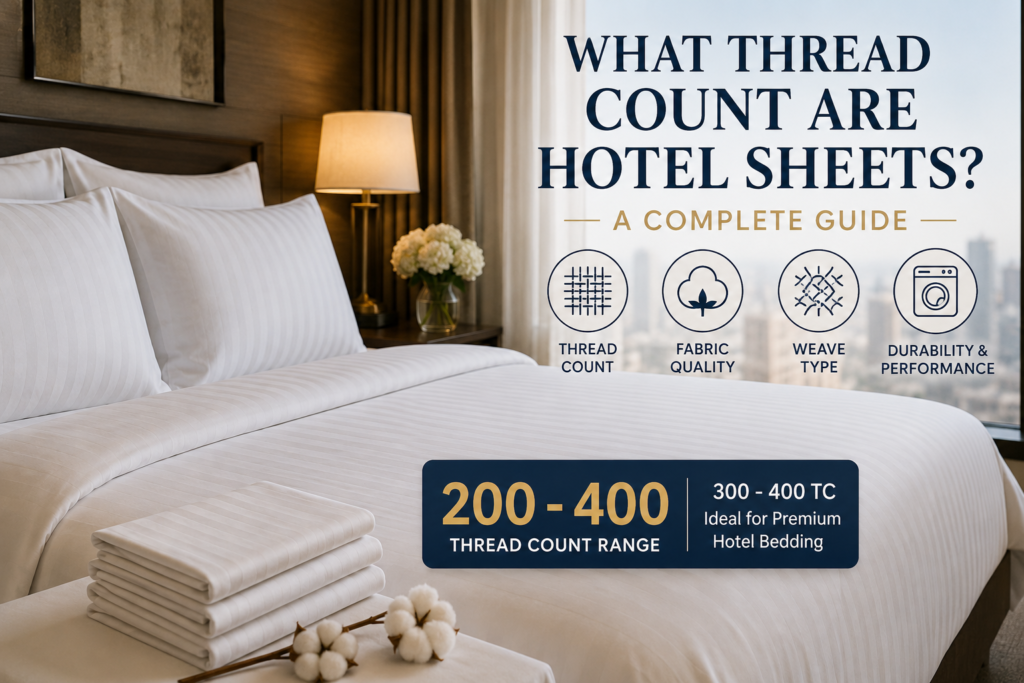
What Thread Count Are Hotel Sheets? A Complete Guide If you have ever slept in a comfortable hotel bed and wondered, what thread count are hotel sheets, you are not alone. Hotel bedding often feels smoother, crisper, and more comfortable than ordinary sheets, but the secret is not simply choosing the highest thread count. In general, hotel sheets commonly fall within the 200 to 400 thread count range, although the exact specification varies by hotel category, fabric, weave, supplier, and desired guest experience. Some higher-end hotel bedding can use thread counts above 400, particularly with certain sateen fabrics. For many hospitality applications, 300 to 400 thread count is a practical range when the fabric, yarn, and construction are also good quality. However, thread count should not be considered a standalone measure of sheet quality. What Is Thread Count? Thread count refers to the number of horizontal and vertical threads woven into one square inch of fabric. For example, a fabric described as 300 thread count has a combined count of approximately 300 warp and weft threads per square inch. It is often abbreviated as TC, so you may see specifications such as 200 TC, 300 TC, or 400 TC. Thread count can provide useful information about fabric construction, but it does not tell you everything about how a sheet will feel or perform. Other factors include: This is why a well-made 250 or 300 TC sheet can sometimes be preferable to a poorly constructed sheet with a much higher advertised count. Sleep Foundation similarly notes that thread count should be considered alongside fiber quality and construction. What Thread Count Are Hotel Sheets Usually? So, what thread count are hotel sheets? A reasonable general range is 200 to 400 TC. Different hotels may choose different specifications based on their budget, brand positioning, climate, laundry operation, and desired feel. A broad guide looks like this: Thread Count Common Hospitality Positioning Typical Feel 180–200 TC Economy and high-turnover applications Lightweight and practical 200–250 TC Budget to mid-range hospitality Crisp and breathable 250–300 TC Mid-range and quality hotel bedding Smooth and comfortable 300–400 TC Upscale and luxury-oriented bedding Softer and more refined 400+ TC Selected premium/luxury applications Often smoother or heavier These ranges are guidelines rather than universal hotel standards. Hospitality suppliers offer different specifications, and individual properties can set their own linen requirements. Hotels For Humanity, for example, identifies 200–300 TC as a common balance between comfort, durability, laundry performance, and cost, while luxury applications may move into the 300–400 TC range. Is 300 Thread Count Good for Hotel Sheets? Yes. 300 thread count can be an excellent choice for hotel sheets, provided the fabric is well constructed. A 300 TC sheet can provide a useful balance between comfort and durability. This is particularly relevant to hotels because bedding is exposed to considerably more frequent washing and use than many household sheets. A 300 TC cotton sheet can also provide the crisp, smooth feel many people associate with hotel bedding. However, the number 300 alone does not guarantee premium quality. You should also consider: The same thread count can feel different depending on these characteristics. Are 400 Thread Count Sheets Better Than 300? Not necessarily. A 400 TC sheet may feel smoother or more substantial than a 300 TC sheet, but higher thread count does not automatically mean better quality. For hotels, the better choice depends on what the property needs from its bedding. A 300 TC percale sheet, for example, may provide a crisp and breathable feel. A 400 TC sateen sheet can feel smoother and have a more noticeable sheen. Therefore, comparing 300 TC and 400 TC without considering the weave and fiber can be misleading. The goal should be to select a fabric that delivers the right combination of: Comfort + durability + breathability + laundering performance + cost. What Thread Count Do Luxury Hotels Use? Luxury hotels do not all use exactly the same thread count. Research from bedding and hospitality sources commonly places luxury hotel sheets somewhere around 300–600 TC, depending on whether the sheets use percale or sateen and on the property’s specifications. Sleep Foundation lists typical hotel percale sheets in the 250–600 range and hotel sateen sheets around 300–600 TC. Other sources focusing on hospitality purchasing commonly identify 300–400 TC as a particularly practical range for premium hotel bedding. It is therefore inaccurate to claim that every five-star hotel uses one specific thread count. Luxury hotels may prioritize the complete fabric specification rather than simply selecting the largest TC number. What Type of Fabric Do Hotels Use? Thread count is only one part of hotel bedding. The type of fabric and weave can have a major effect on the sleeping experience. Two common choices are percale and sateen. Percale Hotel Sheets Percale uses a simple one-over, one-under weaving structure. It generally has a crisp, matte appearance and is known for its breathable feel. This makes percale particularly attractive for hotels that want a fresh, cool, classic bedding experience. Hotel bedding guides frequently identify percale as a common hospitality choice because its construction provides a crisp feel and good breathability. Sateen Hotel Sheets Sateen uses a different weave structure that creates a smoother surface and subtle sheen. Compared with percale, sateen generally feels softer, smoother, and somewhat heavier. It can be a good option for properties seeking a more luxurious or silky guest experience. The choice between percale and sateen is therefore not simply about which one has the higher thread count. Does Higher Thread Count Mean Better Hotel Sheets? No. One of the biggest misconceptions about bedding is that a higher thread count automatically means better quality. Very high advertised thread counts can sometimes involve multi-ply yarn construction, where multiple yarns are twisted together. This can make the stated thread count appear much higher without necessarily providing a corresponding improvement in comfort or durability. Sleep Foundation specifically cautions that some manufacturers calculate thread count using the individual plies, which can make extremely high numbers misleading

how to make your bed like a hotel bed
Uncategorized

How to Make Your Bed Like a Hotel Bed: Easy Steps

How to Make Your Bed Like a Hotel Bed: A Complete Step-by-Step Guide There is something undeniably inviting about a beautifully made hotel bed. Crisp sheets, smooth layers, fluffy pillows, and a perfectly arranged duvet can make an ordinary bedroom feel more luxurious. The good news is that you do not need to stay in a five-star hotel to recreate the look at home. Learning how to make your bed like a hotel bed is mainly about proper layering, smooth bedding, comfortable materials, symmetry, and attention to detail. You can create a clean and luxurious hotel-style bed with the bedding you already own or make gradual upgrades based on your preferences and budget. This guide explains exactly how to make your bed like a hotel bed, step by step. Quick Answer: How to Make Your Bed Like a Hotel Bed To make your bed look like a hotel bed: The hotel-style appearance comes primarily from clean layers, smooth fabric, balanced proportions, and neat finishing techniques, rather than from buying the most expensive bedding. Why Do Hotel Beds Look So Comfortable? Hotel beds usually look luxurious because the bedding is carefully prepared and arranged. Professional-looking beds commonly use: Layering is one of the biggest factors in creating a hotel-inspired appearance. The goal is to make the bed look inviting without making it unnecessarily complicated or uncomfortable to sleep in. What You Need to Make Your Bed Like a Hotel Bed Before you begin, gather your bedding. You may use: You do not need every item on this list. A simple bedding setup can still look polished when each layer fits properly and is smoothed carefully. Step 1: Start With a Clean and Comfortable Mattress The foundation of a hotel-style bed is a clean, supportive sleeping surface. Remove unnecessary items from the mattress and make sure the mattress surface is smooth before adding bedding. If your mattress feels comfortable, you do not need to replace it simply to achieve a hotel look. However, a mattress topper or pad may change the feel of the bed and add extra cushioning for people who prefer a softer surface. A mattress protector can also provide an additional layer between the mattress and bedding. Keep the Mattress Surface Smooth Before placing your sheets on the bed, check for: A smooth foundation makes every layer above it look better. Step 2: Put On the Fitted Sheet Properly A tight fitted sheet is one of the simplest ways to make a bed look neat and professionally prepared. Choose a fitted sheet designed for the depth of your mattress. A sheet that is too loose may bunch up, while one that is too small may pull off the corners. Place the fitted sheet over the mattress and pull each corner securely into position. Then use your hands to smooth the sheet across the entire surface. The Goal Is a Smooth Surface Hotel-style beds generally look neat because there are fewer visible wrinkles. Run your hands from the center of the mattress toward the edges to remove loose fabric. This small step can make a significant difference in the final appearance of the bed. Step 3: Add a Flat Sheet The flat sheet creates another layer and can help produce the classic folded hotel-bed appearance. Place the flat sheet evenly over the fitted sheet. Allow approximately equal amounts of fabric to hang down on both sides. Before tucking anything in, smooth the sheet carefully. A Helpful Hotel-Style Technique Some bed-making guides recommend placing the finished side of the flat sheet facing downward. When the top edge is folded back later, the finished side becomes visible and creates a neat cuff. However, bedding preferences vary, so you can arrange the sheet in whichever direction is most comfortable and visually appealing to you. Step 4: Create Hotel-Style Hospital Corners Hospital corners are a traditional bed-making technique that creates a neat and structured appearance. Sleep Foundation explains that hospital corners can create a smooth, tidy appearance and are commonly used in settings such as hotels. Sleep Foundation: How to Make Hospital Corners on Your Bed They are especially useful when you want the foot of the bed to look tailored. How to Make Hospital Corners Follow these simple steps: 1. Tuck the Bottom Edge Tuck the bottom portion of the flat sheet underneath the mattress. 2. Lift the Side Fabric At one corner, lift the hanging side of the sheet upward to create a triangular shape. 3. Tuck the Lower Fabric Tuck the loose fabric underneath the mattress. 4. Fold the Triangle Down Bring the lifted portion of the sheet downward. 5. Tuck It Securely Tuck the remaining fabric underneath the mattress. Repeat the process on the other side. Hospital corners can create a crisp and structured appearance, but they are optional. If you prefer a looser sleeping setup, you can simply smooth and arrange your bedding neatly. Step 5: Add a Duvet or Comforter Now it is time to create the soft, inviting layer that many people associate with hotel beds. Place your duvet or comforter evenly across the bed. Make sure both sides hang at approximately the same length. Then smooth the surface using your hands. Choose Comfort Over Appearance A hotel-style bed should not only look comfortable—it should also suit your personal sleeping preferences. Choose bedding based on factors such as: There is no single duvet weight or fill type that works for everyone. The most important thing is selecting bedding that helps you feel comfortable while sleeping. Step 6: Create the Classic Hotel Fold One of the most recognizable features of a hotel-style bed is the folded top section. Once your duvet or comforter is in place, fold the top portion of the flat sheet over the duvet. This creates a clean border near the head of the bed. The fold should look even across the width of the bed. You can also fold the duvet slightly downward before folding the sheet over it to create additional layering.

do hotels wash bedspreads
Uncategorized

Do Hotels Wash Bedspreads? Hotel Bedding Cleaning Facts

Do Hotels Wash Bedspreads Between Guests? Hotels do wash bedspreads, but they are not necessarily washed after every guest checks out. Unlike sheets and pillowcases, which are typically treated as changeover linens, heavier bedspreads and decorative bedding may be cleaned according to a property’s individual housekeeping procedures. There is no single universal rule that applies to every hotel worldwide regarding how often bedspreads must be laundered. Practices can vary based on factors such as: Hotel-industry reporting also indicates that many properties have moved away from older, heavy bedspreads and increasingly use washable duvet covers and layered bedding systems. This can make it easier to wash the layers that guests directly touch. The Simple Answer If you are asking, “Do hotels wash bedspreads?”, the most accurate answer is: Yes, hotels wash bedspreads, but the frequency varies, and a bedspread is not automatically washed after every guest at every hotel. Why Hotels Do Not All Wash Bedspreads the Same Way A hotel bedspread can be very different from one property to another. Some hotels use lightweight, washable bedspreads that can be laundered frequently. Others use heavy decorative covers, comforters, or duvet inserts that require larger commercial washing machines and longer drying times. Because of these differences, hotels often create bedding procedures based on their specific linen systems. For example, a hotel may use: Each system has different cleaning requirements. What Bedding Do Hotels Usually Wash Between Guests? In most hotels, the bedding that comes into direct contact with guests receives the most frequent laundering. This commonly includes: Hotel Sheets Sheets are generally removed and replaced when one guest checks out and another guest checks in. Hotels typically use commercial laundry processes to clean sheets before they are used again. Pillowcases Pillowcases are also generally changed and laundered between guests. Duvet Covers Many modern hotels use removable duvet covers. Because a duvet cover can be removed from the insert, it is easier to wash than an entire thick comforter. Some hotels treat duvet covers as regular bed linens and change them between guests, although the exact practice depends on the property. Bedspreads and Decorative Covers This is where hotel practices can vary more significantly. A decorative bedspread may be washed: Recent reporting from hotel-industry sources emphasizes that the cleaning frequency of comforters and bedspreads can differ between properties and that guests should not assume every top bedding layer follows the same schedule as sheets. Do Luxury Hotels Wash Bedspreads More Often? Some luxury hotels may have more extensive housekeeping resources and detailed linen management procedures. However, hotel category alone does not guarantee how frequently a specific bedspread is washed. A five-star hotel and a smaller hotel may use completely different bedding systems. For example, one luxury property may use: Another hotel may use decorative items that are cleaned on a separate schedule. Therefore, travelers should avoid assuming that price or hotel star rating automatically determines how often a bedspread is laundered. The most reliable option is to ask the individual hotel directly about its current bedding-cleaning procedures. What Is Triple-Sheeting in Hotels? Triple-sheeting is a bedding system used by many hotels. The method generally places a blanket, duvet, or other warm layer between washable sheets. A simplified arrangement may look like this: This system creates washable barriers between the guest and the thicker bedding layer. The benefit is that the sheets can be removed and laundered more easily than washing a bulky comforter or duvet insert after every room turnover. Triple-sheeting can help hotels maintain a practical laundry system, but cleanliness ultimately depends on whether the hotel properly follows its own housekeeping and laundry procedures. Are Hotel Bedspreads Clean? A bedspread may be clean and properly maintained, but guests generally cannot determine its exact laundering history simply by looking at it. A clean-looking bedspread does not necessarily indicate when it was last washed. At the same time, it would also be inaccurate to assume that every hotel bedspread is dirty. Hotel cleaning standards vary considerably. Many properties have established housekeeping programs, linen inspections, laundry procedures, and supervisor checks. However, the specific treatment of bedspreads and decorative layers depends on the hotel. The most reasonable approach is to evaluate the bedding when you arrive. Look for obvious issues such as: If you notice a problem, contact the front desk or housekeeping department and request fresh bedding or a replacement. Why Are Heavy Hotel Bedspreads Not Always Washed After Every Guest? Large bedspreads and comforters can be more difficult to clean than sheets. A heavy bedding item may require: Frequent washing may also affect certain fabrics, fillings, stitching, and decorative materials. For this reason, hotels may use removable covers and layered bedding systems instead of laundering a large comforter or bedspread after every checkout. Sources discussing hotel bedding practices consistently note that bulky comforters and decorative layers may follow different cleaning schedules from sheets and pillowcases. Do Hotels Wash Comforters After Every Guest? Not necessarily. The answer to “Do hotels wash comforters after every guest?” is similar to the answer to “Do hotels wash bedspreads?” Some hotels may wash comforters between guests. Other hotels may: There is no reliable rule stating that every hotel washes every comforter after every guest. Individual hotel policies are important. Bedspread vs. Comforter vs. Duvet: What Is the Difference? Understanding hotel bedding terminology can help travelers ask better questions. Bedspread A bedspread is typically a decorative covering that can extend over most or all of the bed. Traditional hotel bedspreads were often heavy and decorative. Comforter A comforter is a filled bedding layer with fabric sewn around the filling. Because the cover is usually permanently attached, the entire comforter generally needs to be cleaned as one item. Duvet A duvet usually consists of: The removable cover can be taken off and washed separately. This is one reason many hotels prefer duvet-style bedding systems. Coverlet A coverlet is generally lighter than a traditional bedspread and may cover the upper portion of the bed. The cleaning schedule depends on the hotel’s

what beds do hotels use
Uncategorized

What Beds Do Hotels Use? Hotel Mattress Guide

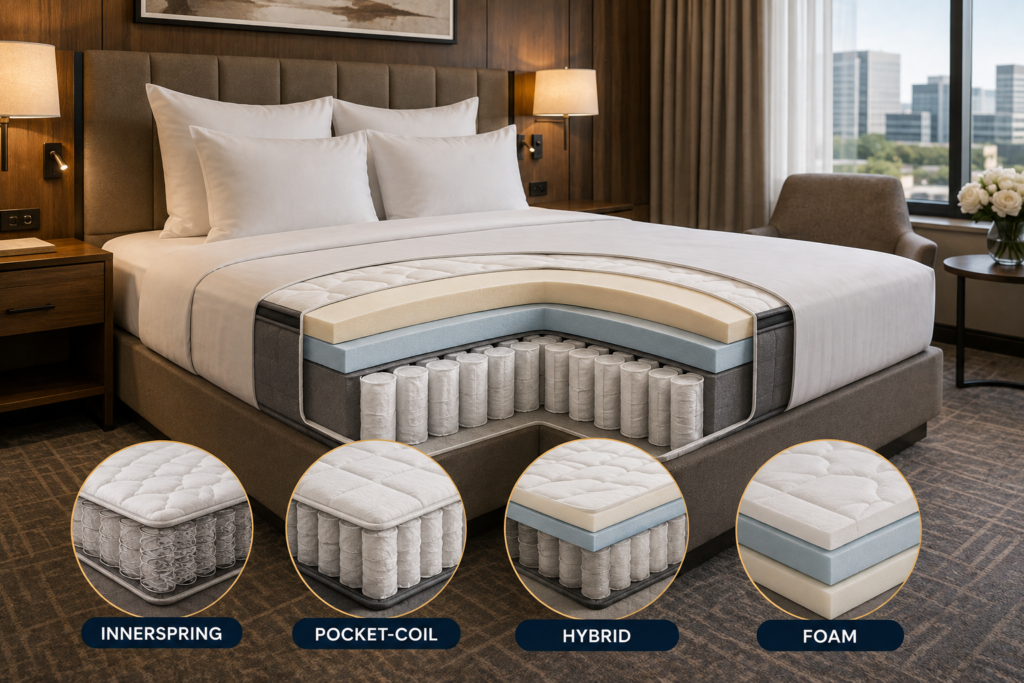
What Beds Do Hotels Use? A Complete Guide to Hotel Mattresses If you have ever slept exceptionally well at a hotel, you may have wondered, what beds do hotels use? The answer is more varied than many people expect. Hotels do not all use one special type of mattress. Depending on the property, brand, room category, market, and operating requirements, hotels can use innerspring, pocket-coil, hybrid, foam, or custom-designed mattresses. Many major hotel brands also have signature beds manufactured specifically for their hospitality programs. For example, Marriott’s current mattress collection includes both foam and innerspring options, while Four Seasons identifies its Signature Mattress as the standard mattress used in its hotels. Westin uses its signature Heavenly Bed, and Hyatt properties can use Hyatt-branded mattresses such as the Hyatt Luxury Eurotop. The important point is that a comfortable hotel bed is usually a complete sleep system, not just a mattress. The mattress, foundation, topper, protector, sheets, duvet, pillows, and bed frame can all contribute to the overall experience. What Beds Do Hotels Use? Hotels commonly use mattresses designed for frequent use, consistent comfort, durability, and straightforward housekeeping. The main mattress constructions found in hotels include: There is no universal hotel mattress specification. A luxury resort may select a custom hybrid mattress, while another hotel may use an innerspring model. An independent boutique hotel may choose a different commercial or retail mattress altogether. Sleep Foundation’s review of hotel mattresses found that major hotel brands use several different constructions. For example, its research describes Four Seasons’ Signature Bed as a pocketed-coil hybrid, while Marriott properties can have different mattress constructions depending on location. What Type of Mattress Do Hotels Usually Use? 1. Innerspring Mattresses Innerspring mattresses use a system of metal coils as their primary support structure. They have been widely used in hospitality because spring-based construction can provide a familiar, responsive feel while supporting repeated use. Modern hotel innerspring mattresses can also include foam, fiber, quilting, or pillow-top comfort layers. Marriott’s current collection, for example, includes dedicated innerspring mattresses for several of its hotel brands. 2. Pocket-Coil Mattresses Pocket-coil mattresses use individually wrapped coils. Because the coils can move more independently than interconnected coil systems, this construction can provide a combination of support and reduced motion transfer. Four Seasons’ current Signature Mattress uses individually flexible pocketed coils as part of its construction. Pocket-coil construction is also found in other premium hospitality mattresses. 3. Hybrid Mattresses Hybrid mattresses combine a spring or pocket-coil support system with foam or other comfort materials. This construction is common in hotel mattresses because it can combine the responsive characteristics of springs with cushioning from foam layers. The exact materials and construction vary significantly between manufacturers and hotel brands. Westin, for example, describes its Heavenly Bed as having a plush-top mattress with gel-infused memory foam. 4. Foam Mattresses Some hotels use all-foam or predominantly foam mattresses. Foam can provide a different feel from traditional spring mattresses, particularly in terms of pressure distribution and motion transfer. Marriott currently offers a Marriott Hotels Foam Mattress alongside its innerspring option, demonstrating that even one major hospitality group can use different mattress constructions. 5. Pillow-Top and Eurotop Mattresses A pillow-top or Eurotop is not necessarily a separate mattress construction. Instead, these terms generally describe additional cushioning attached to or integrated into the mattress surface. A spring or hybrid mattress can therefore have a pillow-top or Eurotop comfort layer. This is one reason a hotel bed can feel soft on the surface while still having a relatively supportive underlying structure. Why Do Hotel Beds Feel So Comfortable? The mattress is only one part of the equation. A hotel bed can feel different because of the entire bedding system. Factors can include: Sleep Foundation notes that many luxury hotel mattresses combine supportive cores with softer upper comfort layers. That means the feeling you associate with a particular hotel may not come from the mattress alone. For example, Marriott’s current Signature Bed package includes a mattress, box spring, topper, duvet, sheets, pillows, and other bedding components. Do Hotels Use Firm or Soft Mattresses? Many hotel mattresses are designed around a balanced or medium-feel sleeping surface, but there is no universal firmness standard. Hotels need beds that work reasonably well for a wide range of guests. As a result, a mattress that is extremely soft or extremely firm may not be suitable for every property. Sleep Foundation reports that many luxury hotel mattresses use a medium-firm support approach with softer comfort layers on top. However, individual hotels can offer different firmness options. Four Seasons, for example, states that its standard Signature Mattress is the default offering while plush and firm options may be available depending on the property and availability. What Mattress Does Marriott Use? Marriott does not have one identical mattress across every property and brand. Its current official bedding store lists mattresses associated with numerous Marriott brands, including Marriott Hotels, JW Marriott, Westin, Sheraton, Renaissance, Courtyard, Fairfield, W Hotels, and others. The Marriott Signature Bed collection currently includes both foam and innerspring mattress options. This is important because the answer to “What mattress does Marriott use?” can depend on the particular Marriott brand and property. What Mattress Does Westin Use? Westin uses its signature Heavenly Bed. Westin’s official website describes the Heavenly Bed as a signature feature in its guest rooms and identifies the current version as a plush-top mattress with gel-infused memory foam. Westin has promoted the Heavenly Bed as part of its sleep-focused guest experience for many years. Because the product has evolved over time, however, travelers should not assume that every historical description of the Heavenly Bed represents the exact current construction. What Mattress Does Four Seasons Use? Four Seasons identifies its Signature Mattress as the standard mattress used in Four Seasons hotels. The current Four Seasons mattress uses pocketed coils together with comfort layers designed for support and temperature management. Four Seasons also states that plush and firm versions may be available. This is a useful example of how

do hotels wash comforters
Uncategorized

Do Hotels Wash Comforters? What Travelers Should Know

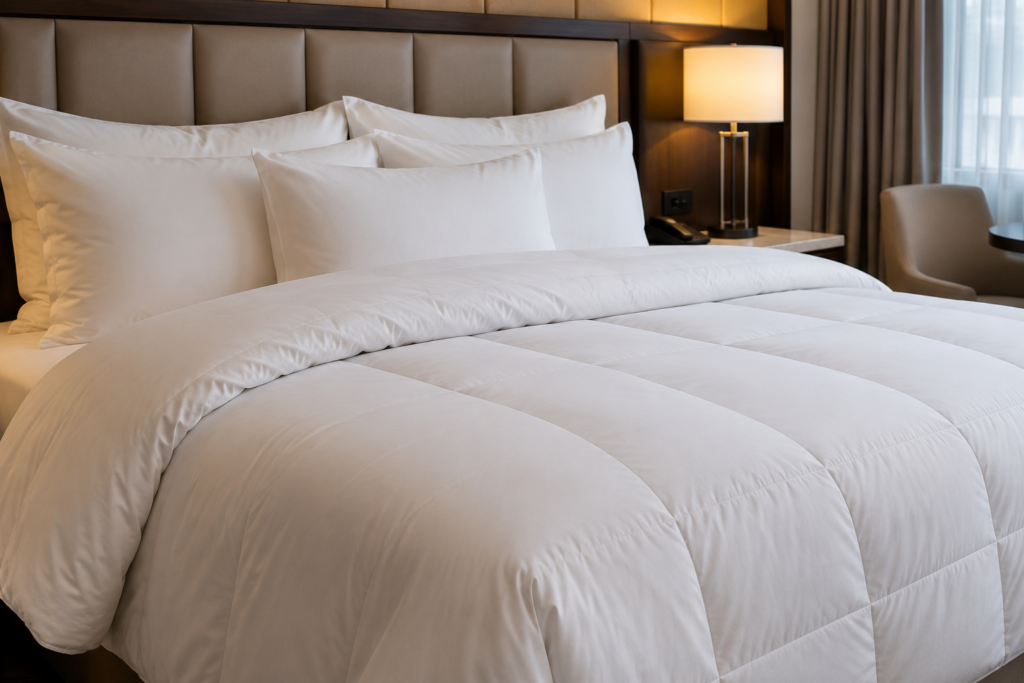
Do Hotels Wash Comforters? What Travelers Should Know If you have ever wondered, do hotels wash comforters after every guest, you are not alone. The answer is: sometimes, but not necessarily after every stay. Hotel bedding practices vary by property, bedding design, housekeeping procedures, laundry capacity, manufacturer care instructions, and applicable local regulations. A hotel may use a traditional comforter, a duvet insert with a removable cover, or a layered bedding system. These arrangements can have very different cleaning schedules. The most important distinction is between the outer bedding layer that guests directly contact and the bulky insert or comforter underneath it. Many hotels can launder removable covers and sheets more frequently than the entire filled comforter or duvet insert. There is also no single worldwide rule stating that every hotel must wash every comforter after every checkout. Regulations can vary by jurisdiction, while individual hotels establish their own housekeeping and laundry procedures. Do Hotels Wash Comforters? Yes, hotels wash comforters, but the frequency varies. Some hotels may launder the entire comforter or duvet insert between guests. Others use a removable duvet cover or layered-sheet system that allows the exposed bedding to be removed and laundered while the heavier insert is cleaned according to a separate schedule. This distinction matters because the word “comforter” is sometimes used loosely to describe several different components of a hotel bed. For example, a hotel bed may contain: Not every property uses the same combination. Current hospitality guidance and industry sources support the idea that hotel bedding practices are not identical across all properties. The American Hotel & Lodging Association’s hospitality-law database also demonstrates that bedding requirements can vary by jurisdiction. For example, some state regulations specifically address clean bedding and the handling or laundering of hotel linens. Do Hotels Wash Comforters After Every Guest? Not necessarily. This is one of the most important answers for travelers. Hotels do not follow one universal schedule for washing every comforter after every checkout. A property may: The exact procedure depends on the hotel’s bedding system and housekeeping policy. Recent competitor research also shows this variation. Beds & Spreads explains that some properties use removable duvet covers while cleaning inserts less frequently, while DOWNLITE similarly notes that comforter-cleaning practices vary by hotel and property type. Therefore, it would be inaccurate to claim that all hotels wash comforters after every guest or that no hotels wash comforters between guests. Both practices can exist. What Is the Difference Between a Comforter and a Duvet? Understanding the terminology makes hotel laundry practices much easier to understand. A comforter is generally a filled, quilted bedding piece designed to be used as one complete item. A duvet or duvet insert is commonly a filled inner layer that fits inside a removable duvet cover. The duvet cover functions somewhat like a large washable casing around the insert. This design can make hotel laundry more practical because the cover can be removed without having to process the entire bulky insert every time. Martha Stewart’s recent coverage of hotel bedding explains why some hospitality properties prefer duvet covers: the removable cover can be laundered and replaced more easily than a heavy comforter. Why the Difference Matters Suppose a hotel uses a duvet insert inside a removable cover. The housekeeping team can remove the used cover, send it to the laundry, and place a clean cover on the insert. In that situation, saying “the duvet wasn’t washed” does not necessarily mean that the guest is using the same exposed fabric that the previous guest used. The cover and insert are separate components. That is why travelers should ask whether a hotel uses a freshly laundered duvet cover rather than simply asking whether the “duvet” was washed. How Do Hotels Keep Bedding Clean? Hotel laundry systems are designed around the type of textile being processed, the degree of soiling, equipment capabilities, detergent and chemical selection, drying requirements, and manufacturer instructions. Although CDC laundry guidance is written for healthcare environments rather than ordinary hotels, it provides useful evidence about professional textile processing principles. The CDC explains that effective laundering depends on factors including time, temperature, mechanical action, water quality, detergent or laundry chemicals, and the characteristics of the load. The CDC also recommends following fabric-care instructions and special laundering requirements for textile products. For hotels, this means a comforter should not simply be washed using an arbitrary temperature or cycle. The laundry process should be appropriate for the material and the manufacturer’s care instructions. Why Don’t Hotels Always Wash the Entire Comforter Between Guests? A full-size comforter or duvet insert can be substantially more difficult to process than sheets or pillowcases. Filled bedding can: This does not mean a hotel can ignore dirty bedding. If a comforter is visibly soiled or contaminated, the appropriate response is to remove it from service and process it according to the property’s laundry procedures and applicable requirements. A hotel may also choose to launder bedding more frequently than its minimum operational schedule as part of its housekeeping standards. Are Hotel Sheets Washed More Frequently Than Comforters? In many hotel bedding systems, yes. Sheets and pillowcases are directly exposed to guests and are generally treated as frequently changed guest-room linens. Comforters and duvet inserts can be handled differently because they may be protected by sheets or removable covers. However, the exact policy depends on the property. The distinction between the layers is important. A hotel may remove and launder the sheets and duvet cover after checkout while leaving the insert in place for continued use until it reaches its scheduled cleaning point or requires cleaning. Some hotels may instead launder the complete bedding assembly. What Happens If a Comforter Is Stained? A visibly stained or soiled comforter should not simply remain on a guest bed. Housekeeping procedures generally include inspecting bedding during room turnover. If an item is visibly dirty, damaged, or otherwise unsuitable for the next guest, the hotel can remove it for cleaning, treatment, repair, or replacement. The appropriate laundry

what kind of mattresses do hotels use
Uncategorized

What Kind of Mattresses Do Hotels Use? Hotel Guide

What Kind of Mattresses Do Hotels Use? If you’ve ever slept exceptionally well in a hotel, you may have wondered, what kind of mattresses do hotels use? There is no single mattress that every hotel chooses. Mattress construction varies according to the hotel’s brand, property category, room type, location, budget, and guest requirements. However, many hotels use mattresses built around durable support systems such as innerspring or pocket-coil cores, while hybrid designs combine springs with foam or other comfort layers. Luxury properties may also use custom-designed mattresses, pillow-top constructions, or mattress-and-topper combinations to create a distinctive sleep experience. For hotel operators, choosing a mattress is about more than making a bed feel comfortable. A hospitality mattress needs to provide a consistent guest experience while also being suitable for frequent use, routine maintenance, and the operational requirements of the property. What Kind of Mattresses Do Hotels Use Most Often? Hotels use several different mattress constructions, but innerspring, pocket-coil, hybrid, and foam mattresses are among the main types found in hospitality settings. The exact specification can differ significantly between properties. For example, Sleep Foundation’s research into major hotel brands shows that some properties use hybrid mattresses with pocketed coils and foam layers, while other hotel brands or locations may use innerspring or all-foam constructions. This means there is no universal definition of a “hotel mattress.” Instead, hospitality mattresses are generally selected around a combination of support, comfort, durability, maintenance, and guest expectations. 1. Innerspring Mattresses Innerspring mattresses use a system of metal coils as their primary support structure. They have been widely used in hospitality because spring systems can provide a supportive sleeping surface and a familiar mattress feel. Different spring designs can produce different levels of responsiveness, support, and motion transfer. Pocketed coils, for example, allow individual springs to respond more independently than some traditional interconnected coil systems. For hotels accommodating couples and other shared-room guests, motion control can be an important consideration when selecting a mattress. 2. Pocket-Coil Mattresses Pocket-coil mattresses contain individually wrapped springs that can respond more independently to pressure. This construction is particularly useful when hotels want to balance support with reduced movement across the sleeping surface. Pocketed coils can also contribute to airflow through the mattress structure. The Four Seasons Signature Bed, for example, is described by Sleep Foundation as a hybrid design using a pocketed-coil support base together with foam comfort layers. 3. Hybrid Hotel Mattresses Hybrid mattresses combine a spring support system with one or more comfort layers, commonly foam. This construction has become an important option in hospitality because it can combine the responsiveness and airflow associated with springs with the cushioning characteristics of foam. A hybrid hotel mattress may include: The exact materials and construction depend on the manufacturer and hotel specification. For example, Sleep Foundation describes both the Four Seasons and Ritz-Carlton beds as hybrid constructions, although their designs and materials differ. 4. Foam Mattresses Some hotels use all-foam mattresses rather than spring-based designs. Foam mattresses can be constructed from different materials and densities, including polyurethane foam and memory foam. Their feel depends heavily on the composition and thickness of the individual layers. Importantly, not every hotel uses the same construction. Sleep Foundation notes that Marriott properties, for example, can have different mattress constructions depending on the market, including all-foam and innerspring models. Do Hotels Use Medium-Firm Mattresses? Many hotels choose a medium or medium-firm feel because hotel rooms are used by a wide range of sleepers. A mattress that is extremely soft or extremely firm may not suit as many guests. A balanced support level with a cushioning comfort layer can provide a more broadly appealing sleeping surface. Sleep Foundation reports that many hotel mattresses combine a medium-firm support core with softer upper comfort layers. This helps explain why some hotel beds can feel plush when you lie down even though the underlying mattress is not particularly soft. However, firmness is not standardized across the hospitality industry. Some properties offer different firmness options, while particular hotel brands may develop their own specifications. Why Do Hotel Mattresses Feel So Comfortable? The mattress is only one part of the hotel sleep experience. A professionally prepared hotel bed may combine the mattress with a foundation or bed base, mattress protector or topper, sheets, duvet, pillows, and carefully selected room conditions. This complete setup can influence how the bed feels to a guest. A comfortable hotel bed may therefore involve several layers working together rather than relying on an unusually soft mattress alone. Mattress Support A supportive core helps establish the overall feel of the bed. Depending on the mattress, this may come from pocket coils, other spring systems, or foam. Comfort Layers Foam, quilted upholstery, pillow-top sections, or other cushioning materials can provide additional softness above the support core. Mattress Toppers Some properties use a separate topper or additional cushioning layer to alter the feel of the bed without changing the underlying mattress. Quality Bedding Sheets, duvet covers, pillows, and other hotel linen also contribute to the overall sleeping experience. The interaction between these products and the mattress can affect how a guest perceives the bed. For hospitality operators, this is why mattress selection should be considered as part of the wider hotel bedding system, rather than as an isolated purchase. What Makes a Good Hotel Mattress? A suitable hotel mattress needs to meet the requirements of both guests and the property. Hotels typically need to consider factors such as: Guest comfort: The mattress should provide a comfortable sleeping surface for a broad range of guests. Support: The support system should match the intended use and mattress design. Durability: Hospitality mattresses experience frequent use and therefore need to be selected with the property’s operating conditions in mind. Motion management: For double-occupancy rooms, limiting unwanted movement between sleepers may be an important consideration. Temperature management: Mattress construction and room conditions can influence how warm or cool the sleeping surface feels. Maintenance: Hotels should consider cleaning procedures, mattress protection, rotation requirements, and manufacturer care

what kinds of pillows do hotels use
Uncategorized

What Kinds of Pillows Do Hotels Use? Complete Guide

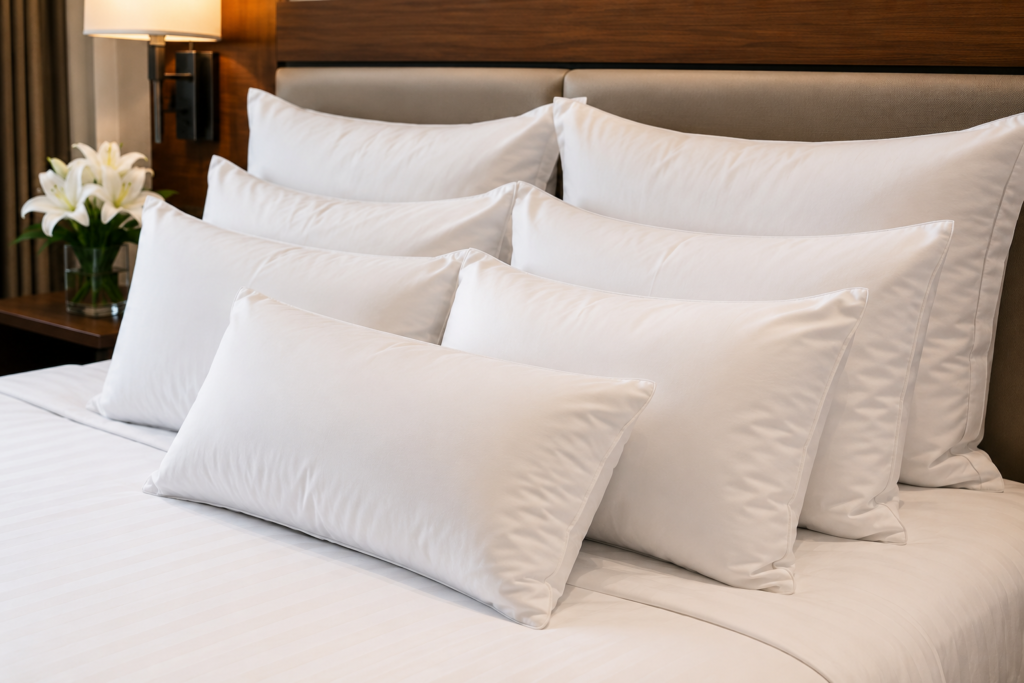
What Kinds of Pillows Do Hotels Use? Have you ever slept in a hotel and wondered why the pillows felt so comfortable? The answer is not simply that hotels use one special type of pillow. Hotels use several kinds of pillows, and the choice depends on the property’s budget, room category, guest expectations, laundry requirements, and desired level of comfort. Common hotel pillow types include down pillows, feather and down pillows, and down-alternative pillows made with synthetic fibers such as polyester or microfiber. Some hotels also provide specialty pillows made from materials such as memory foam or latex. Many properties use more than one pillow type or firmness level so guests have some flexibility when choosing their preferred sleeping surface. There is no universal hotel pillow standard that requires every property to use a particular filling or construction. What Kind of Pillows Do Hotels Use? The most common hotel pillows generally fall into a few categories: natural down and feather pillows, synthetic down-alternative pillows, and specialty pillows such as memory foam or latex. Hotels choose among these options based on the experience they want to provide and the practical requirements of operating a guest-room linen program. 1. Down Pillows Down pillows are filled with the soft underlayer found beneath the outer feathers of ducks or geese. Down is lightweight and compressible and is commonly associated with a soft, plush pillow feel. Luxury and upscale properties may use down pillows as part of a premium bedding program. However, genuine down is not automatically the best choice for every hotel. Procurement teams also need to consider cost, care requirements, sourcing, guest preferences, and whether feather-free alternatives are needed. The quality of a down pillow can also vary considerably depending on factors such as the type and quality of the down, fill weight, construction, and cover. 2. Feather and Down Pillows Feather and down pillows combine two different natural fills. Down provides softness and loft, while feathers generally contribute more structure and resilience. This combination is commonly associated with traditional luxury hotel bedding. Industry sources note that feather-and-down pillows are widely used in hospitality, although the exact blend and construction vary between properties. For hotels, the attraction is the balance between a plush surface and a more supportive feel. The exact experience depends on the fill ratio, quality, pillow construction, and firmness. 3. Down-Alternative Pillows Down-alternative pillows use synthetic fibers designed to provide some of the softness and loft associated with natural down. Common fills include polyester and microfiber-based fibers. Down-alternative pillows are popular in hospitality because they can provide a consistent feel across rooms while generally being easier to maintain than some natural-fill alternatives. They can also be useful when a hotel wants to offer a feather-free option. However, the term “hypoallergenic” should not automatically be assumed for every synthetic pillow. Hotels should check the manufacturer’s actual material and certification information before making allergy-related claims. 4. Memory Foam Pillows Memory foam pillows are another option found in some hotel and hospitality bedding programs. Unlike loose fiber fills, memory foam is designed to respond to pressure and provide a more structured, contouring feel. Some properties may offer memory foam as a specialty option rather than using it as the standard pillow throughout every room. The right choice depends on the property’s target guest experience, pillow specifications, cleaning requirements, and purchasing program. 5. Latex Pillows Latex pillows provide another type of specialty support. They generally have a more resilient and structured feel than down or down-alternative fiber pillows. Latex may be considered by boutique, wellness-focused, or premium properties looking to offer a different sleeping experience. As with any specialty pillow, hotels should evaluate the material, care instructions, durability, guest preferences, and cost before adding it to their standard room inventory. Why Do Hotels Use Different Types of Pillows? There is no single pillow that feels equally comfortable to every guest. A person’s preferred pillow can depend on sleeping position, body size, preferred firmness, personal comfort, and other factors. Sleep Foundation notes that firmness and fill both influence how a pillow feels, and that different sleepers may prefer different levels of support. For this reason, some hotels provide different pillow options or firmness levels. Major hotel retail programs also offer choices such as down, down alternative, and feather-and-down pillows rather than treating one construction as universally suitable. This approach can give guests more flexibility without requiring the hotel to use a completely different bedding system in every room. What Filling Is Most Common in Hotel Pillows? There is no reliable universal statistic showing that one filling is used by all or most hotels worldwide. However, down, feather-and-down, and down-alternative synthetic fills are repeatedly identified as common hotel pillow categories by hospitality and bedding sources. The choice usually comes down to several practical factors: Therefore, a luxury hotel, business hotel, resort, boutique property, and budget accommodation provider may all make different pillow choices. Do Hotels Use Down or Down-Alternative Pillows? Both. Down pillows can provide a lightweight, plush feel and are often associated with higher-end bedding. Down-alternative pillows use synthetic materials and can offer a practical feather-free alternative with relatively straightforward care requirements. Marriott’s hotel pillow collection, for example, includes down, down-alternative, and feather-and-down options, illustrating that even within a major hotel brand ecosystem, there is not necessarily one universal pillow filling. For a hotel buyer, the better question is not simply “Which fill is best?” but rather: Which pillow construction best fits the property’s guests, operating requirements, budget, and bedding standards? What Makes a Good Hotel Pillow? A good hotel pillow needs to work for both the guest and the property’s operations. Guest comfort is obviously important, but hotel buyers also need to consider consistency, care, durability, sizing, replacement requirements, and the overall bedding setup. Important factors include: Fill and construction The filling affects softness, resilience, loft, and overall feel. Construction also matters because two pillows using similar materials can perform differently depending on how they are manufactured. Firmness Hotels may choose soft, medium,

Scroll to Top