Difference Between Cotton and Linen: Complete Fabric & Bedding Guide
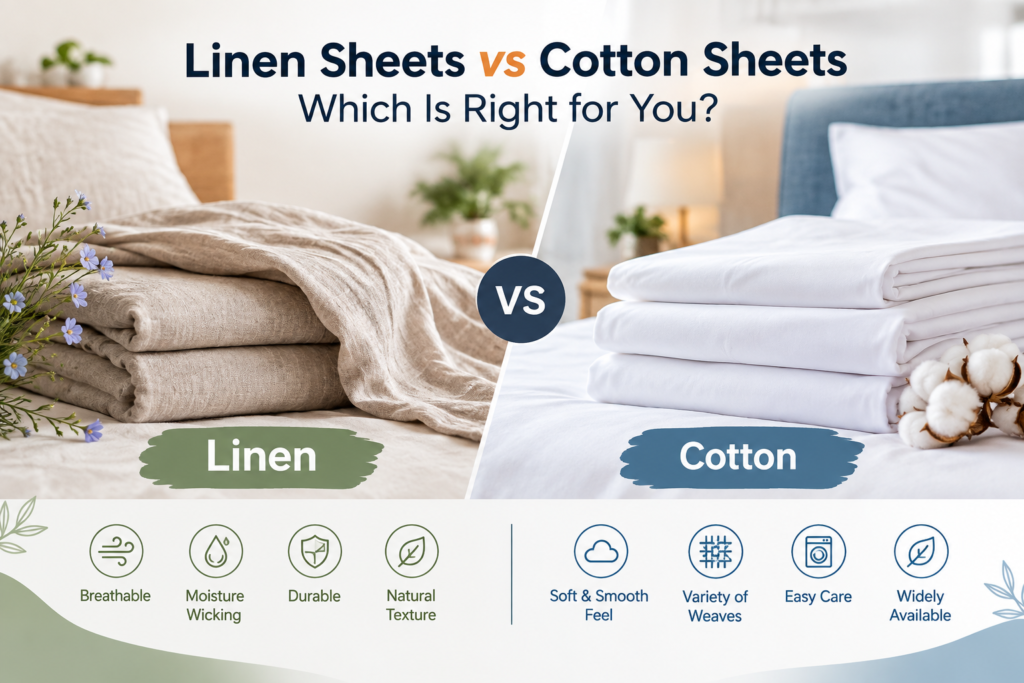
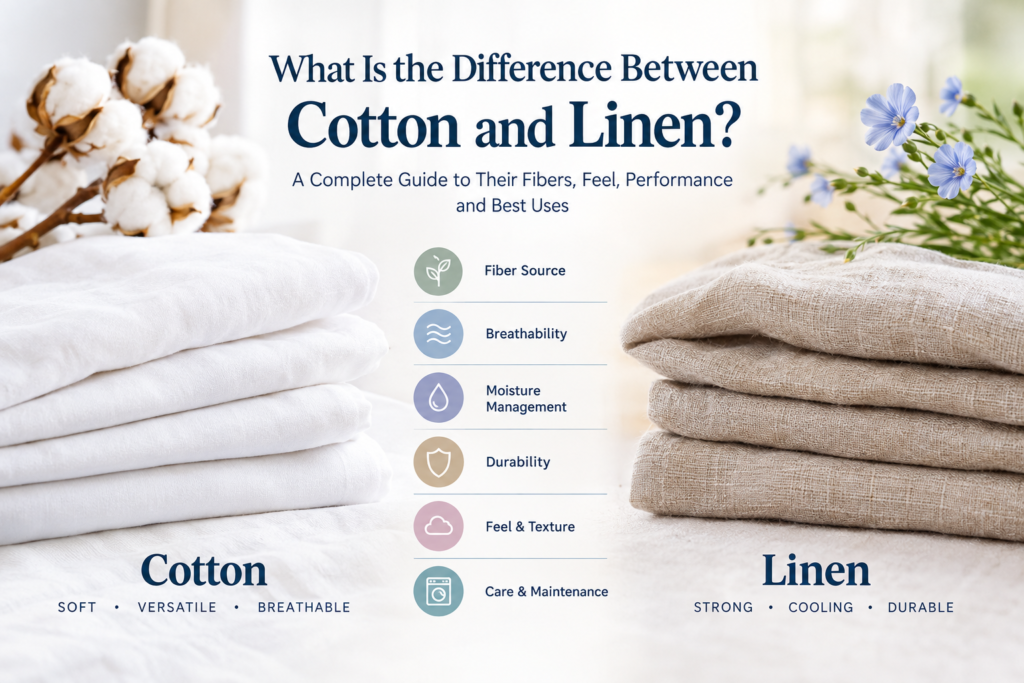
What Is the Difference Between Cotton and Linen? If you are comparing natural fabrics for sheets, bedding, clothing, or other textiles, understanding the difference between cotton and linen can help you choose the right material for your needs. Both are plant-based fibers, but they come from different plants and have different textures, performance characteristics, care requirements, and typical uses. The simplest difference is this: cotton comes from the cotton plant, while linen is made from the fibers of the flax plant. Both can be breathable and moisture-managing, but linen is generally known for stronger breathability and a distinctive crisp, textured feel, while cotton offers a wider range of textures and finishes and is often easier to find at different price points. Cotton vs. Linen at a Glance Feature Cotton Linen Plant source Cotton plant Flax plant Feel Usually soft and smooth Crisp and textured at first Breathability Very good Excellent Moisture management Good Excellent Durability Depends strongly on cotton type and construction Generally very durable Wrinkling Usually moderate More noticeable Softens with washing Yes Yes Temperature regulation Good Excellent Typical appearance Can be smooth, crisp, or silky Naturally relaxed and textured Common bedding use Sheets, duvet covers, pillowcases Sheets, duvet covers, pillowcases These characteristics can vary considerably depending on fiber quality, yarn, weave, finishing, fabric weight, and manufacturing process. What Is Cotton? Cotton is a natural cellulose fiber obtained from the cotton plant. It is one of the most widely used textile fibers and is common in bedding because it can provide softness, breathability, absorbency, and versatility. The final performance of cotton bedding depends on more than the word “cotton” on the label. Fiber length, yarn quality, weave, finishing, and construction all influence how the finished fabric feels and performs. For example, cotton sheets can use different weaves. Percale generally creates a crisp, breathable feel, while sateen creates a smoother surface with a subtle sheen. Long-staple cotton is also commonly associated with softer and more durable fabrics because longer fibers can contribute to smoother and stronger yarns. What Is Linen? Linen is a natural textile made from fibers obtained from the flax plant. Flax fibers are relatively strong, which contributes to linen’s reputation for durability. Linen is particularly valued for airflow and moisture management. The flax and linen performance information published by the Alliance for European Flax-Linen & Hemp explains properties such as air permeability, moisture absorption, and thermoregulation. New linen can feel crisp or somewhat coarse compared with soft cotton. However, linen generally becomes softer with repeated washing and use while retaining its characteristic texture. Difference Between Cotton and Linen for Breathability Breathability is one of the most important differences when comparing cotton and linen bedding. Cotton is naturally breathable, which is one reason it is widely used for sheets. Linen can allow particularly strong airflow and is often selected by people who prefer a cooler, more ventilated sleeping environment. However, “cooling” does not mean that one fabric automatically works better for every person. Fabric weight, weave, room temperature, humidity, mattress construction, duvet insulation, and personal preference also affect sleeping comfort. For hot or humid environments, lightweight breathable bedding can be especially useful. Cotton vs. Linen: Which Is Softer? Cotton usually has the advantage if your first priority is a smooth and familiar soft feel. High-quality cotton can feel soft and comfortable from the beginning, while linen may feel more textured or crisp when new. Linen gradually softens through use and laundering, but it normally retains more of its characteristic natural texture than cotton. This makes the choice partly subjective: Which Is More Durable: Cotton or Linen? Both can be durable, but the result depends heavily on the quality and construction of the fabric. Linen fibers are known for strength and can produce long-lasting textiles when properly manufactured and cared for. Cotton durability varies according to fiber length, yarn, weave, fabric construction, and finishing. This is particularly important for commercial bedding. Hotels and other hospitality businesses need to consider repeated laundering, dimensional stability, fabric construction, replacement cycles, and consistency across bulk orders rather than looking only at the fiber name. For hospitality applications, you can explore commercial hotel bedding from Atlas & Indus Linen as an example of how cotton bedding can be designed around frequent professional laundering and hospitality requirements. Linen vs. Cotton Sheets: Which Should You Choose? There is no universal winner because the right choice depends on what you value. Choose cotton sheets if you want: Cotton is particularly versatile because the same fiber can be manufactured into fabrics with substantially different textures and performance characteristics. Choose linen sheets if you want: Linen can be especially appealing to people who sleep warm or live in hot climates because of its breathability and moisture-management characteristics. Cotton vs. Linen for Hot Sleepers If you frequently feel warm during sleep, fabric breathability should be one of your purchasing considerations. Linen is highly breathable and can promote airflow, while cotton also provides good breathability. The construction of the sheet matters, too. A lightweight, breathable cotton percale, for example, can feel quite different from a heavier cotton sateen. Rather than choosing solely by fiber name, look at: This approach can prevent a common buying mistake: assuming that every cotton sheet or every linen sheet will feel the same. Thread Count: Is Cotton or Linen Better? Thread count should not be compared directly between cotton and linen as if a higher number automatically means better quality. Linen fibers are generally thicker than cotton fibers, so linen commonly has a lower thread count. Sleep Foundation notes that linen sheets often fall into lower thread-count ranges than cotton sheets and that thread count is not generally the only or most useful quality indicator for linen. For linen, GSM can be a more useful measurement to consider alongside fiber quality, construction, and finishing. For cotton, thread count can provide some information, but it should still be considered together with fiber quality and weave rather than used as the sole purchasing criterion. How to Care